

1 of 6
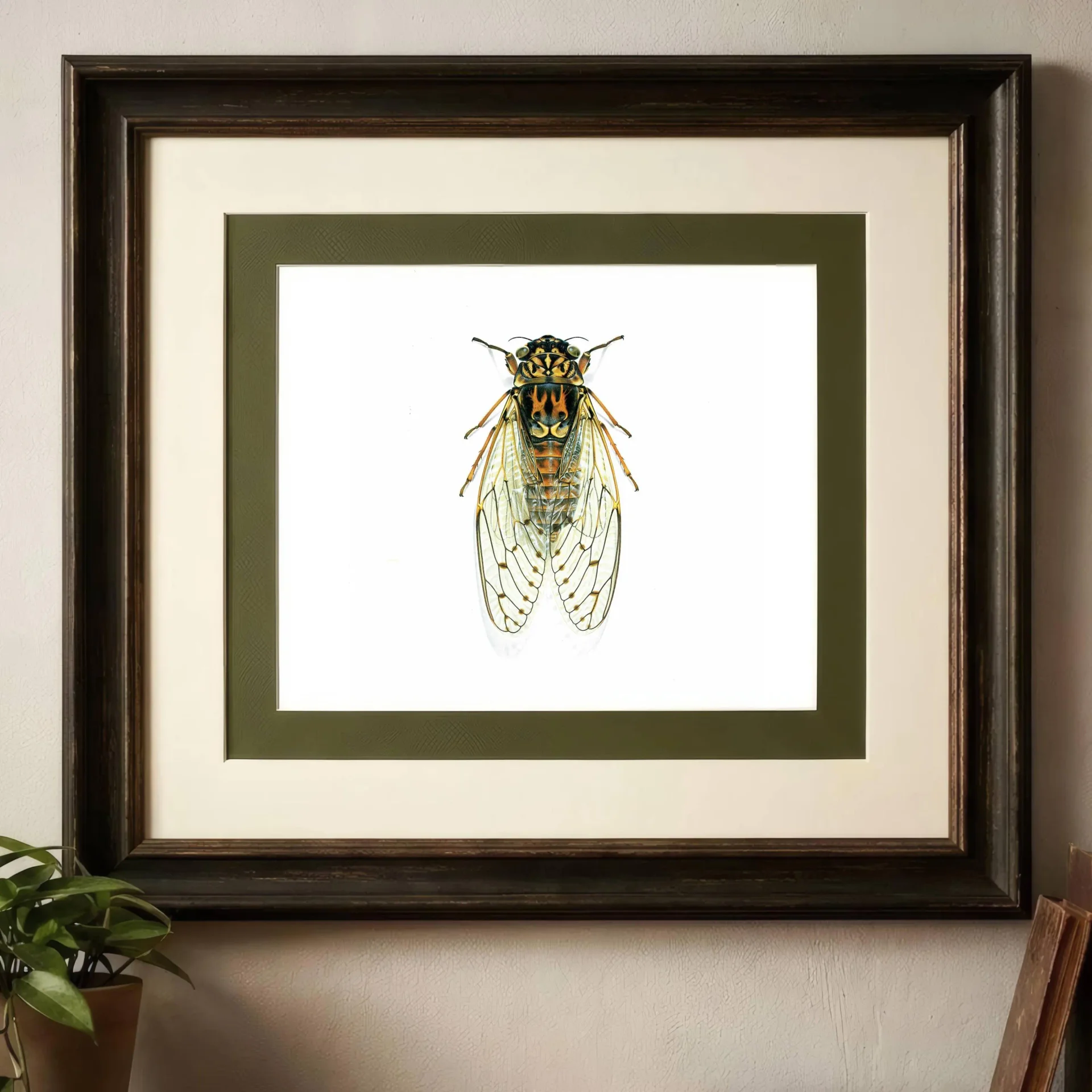
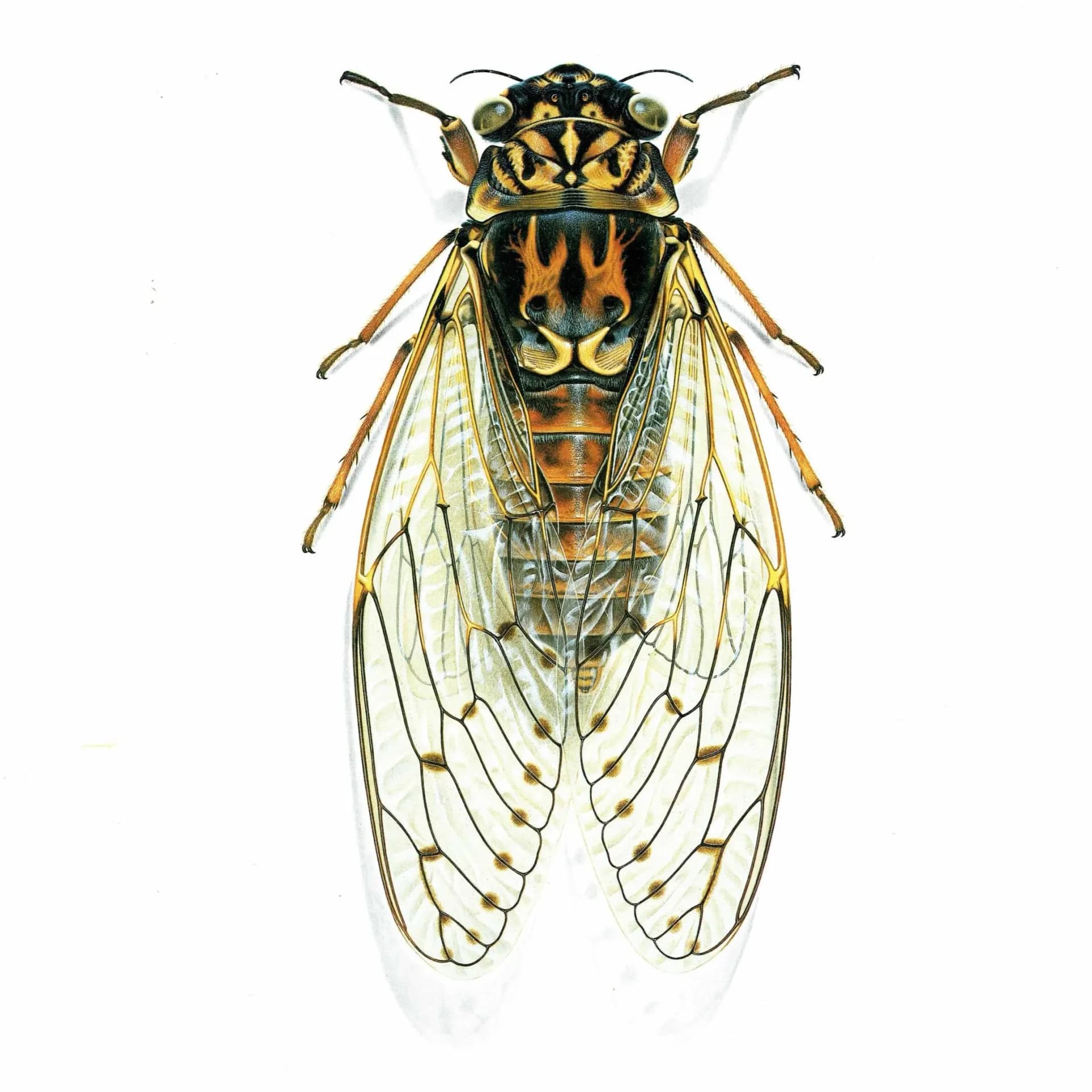
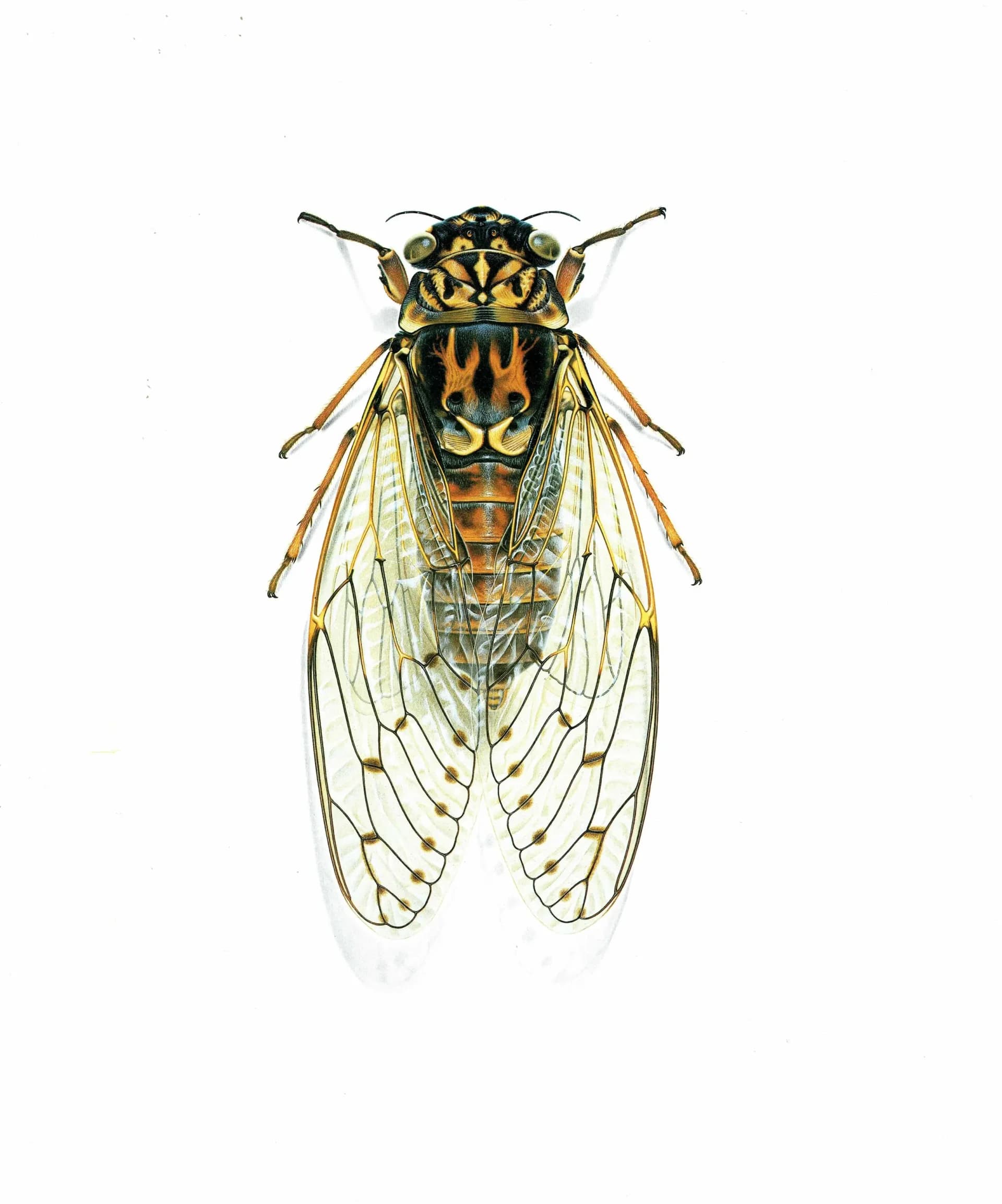
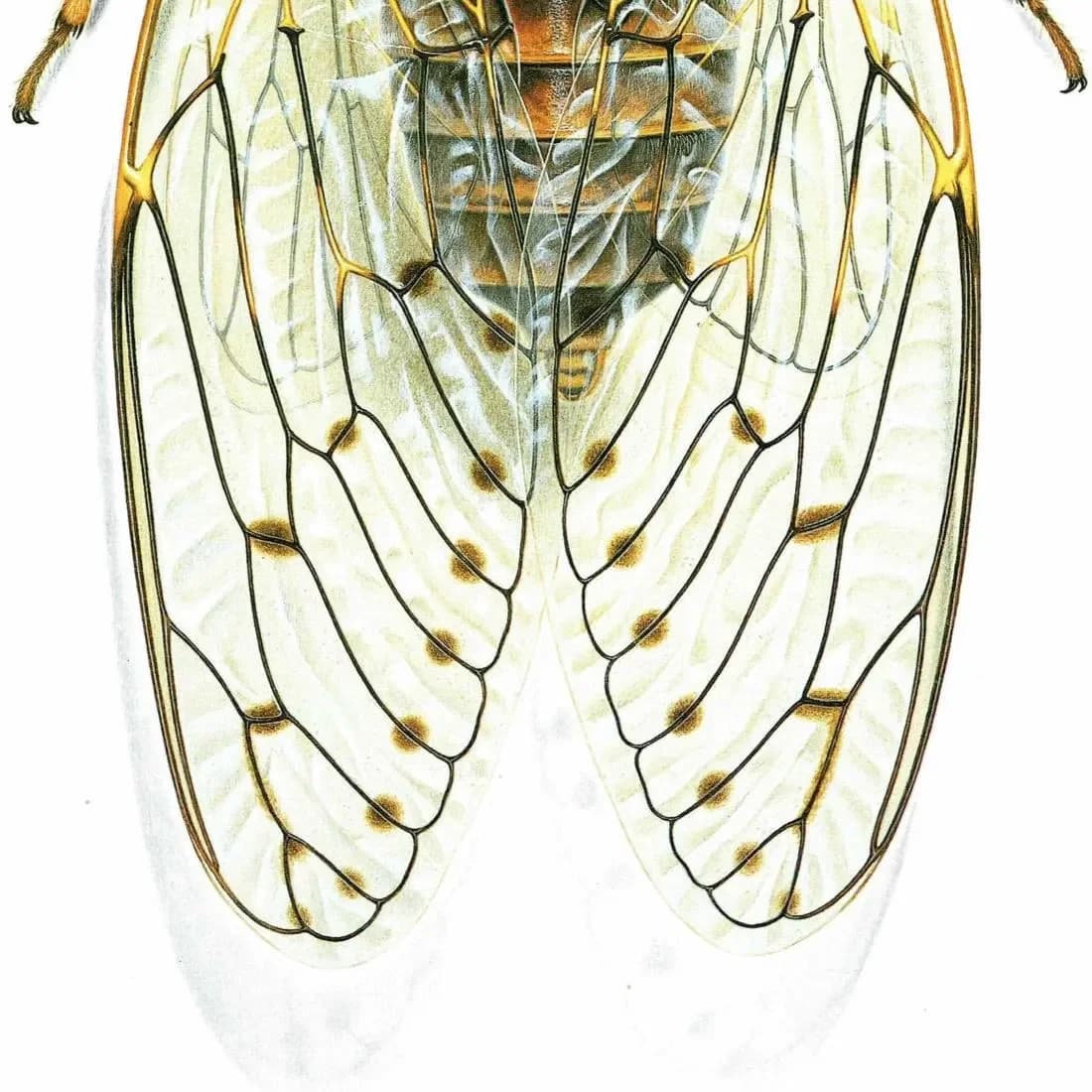
1986 Ash Cicada Tettigia Orni Print - Durin Bernard Les Insectes Scientific Illustration - Linnaeus Entomology - 11 x 13 in
This is a gorgeous high quality vintage print with vivid colours taken from a disbound copy of Les Insectes by Bernard Durin. The dimensions are 11 x 13 inches.
Visit https://www.etsy.com/uk/shop/ForestHillArtsHouse?section_id=53836226 for more Insects prints.
Few are those, among us, who have actually seen the insect responsible, but many have certainly already heard its singing. Cicadas are discreet insects that hide during the day among the yellowed foliage of shrubs and trees. Only their song betrays their presence. It can be a strident element, reminiscent of the sound of banging on empty tin cans, or just as deafening as the noise of a mechanical threshing machine. The song can soften into a melodious pianissimo, rise in a crescendo crescendo, then suddenly stop or revert again to a loud hum. The ash cicada produces this sound from a chord of four sounds repeated about 200 times per minute. Only the males sing. The Greek Xenarchos wrote: "...and the song of the happy cicada, for its family is mute." But the female remains silent because she cannot perceive the song. Her instruments are not drums nor stringed instruments like those of crickets and katydids.
On each side of the base of the abdomen, the males of the cicada species have a stretched membrane, analogous to a tympanum, which resonates in a chitinous cavity. On the inner face of each convex membrane is a powerful muscle that alternately contracts and relaxes in rhythmic movements; the muscle pulls the tymbal into its initial convex shape, producing a short dry sound. This is how the sounds are created. The resonance chamber is made of two cavities inside the abdomen. On each side of the abdomen, the male and female have, below a chitinous membrane, an auditory organ that includes a tympanum receiving the sounds and a sensory organ registering the vibrations of the tympanum.
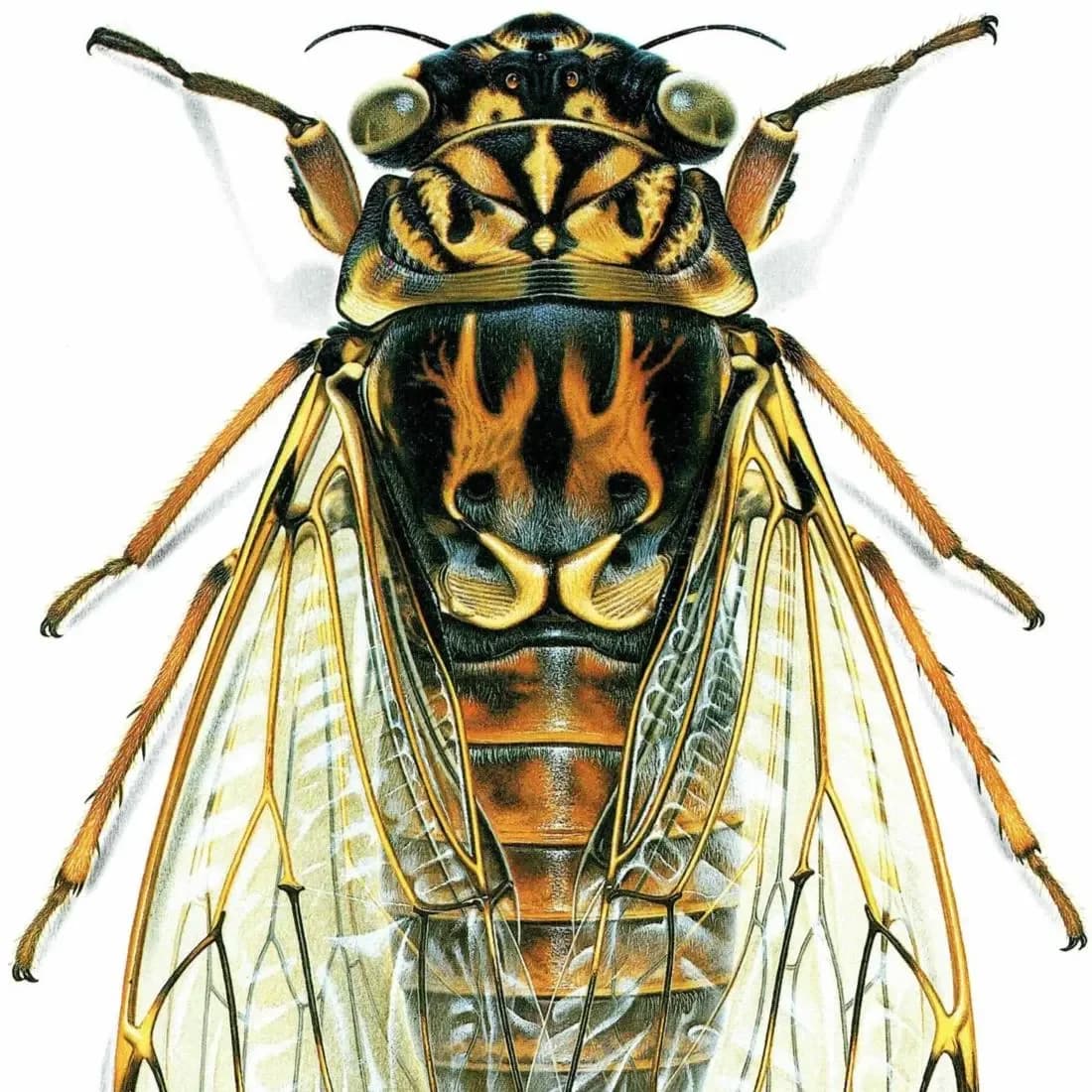
Cicadas can have diverse shapes. The antennae, despite the shortness of their segments, are characteristic, as is the rest of the body on the lower face of the head and thorax, which is placed between the legs. The thickened posterior femurs make the jump possible. Females usually possess a long ovipositor with which they pierce plants to lay their eggs. Once hatched, the larvae fall to the ground where they lead a subterranean life, feeding on the roots of plants. The larva, with its sharp mouthparts, digs into the soil or a root to suck its sap.
The largest number of the roughly 1600 cicada species live in tropical or subtropical regions. 45 species are found in Europe, mainly in the Mediterranean areas; only 3 species live in Central Europe. Each species produces a specific song that can serve to identify it. Feeding exclusively on sap from trees, shrubs, or herbs, some cicadas secrete a sweet substance, sometimes called "manna" in popular language, hence the name "manna cicada" sometimes given to the ash cicada. This manna, also called miellet, was once used in medicine.
**Background**
The artist Bernard Durin was an artist and illustrator transforming the tiniest creatures into works of art. Born in France in 1940, "Beetles and Other Insects," was published in 1980. It is considered a masterpiece. Durin has captured the intricate patterns, textures, and colours of his subjects with stunning accuracy. He made around 60 portraits of insects, using rare and fascinating specimens entrusted to him by the entomologists of the Museum of Natural History in Paris. Durin’s work combines scientific precision with artistic beauty. This has made them valuable to entomologists and other scientists. Bernard Durin passed away in 1988. His illustrations continue to be admired for their beauty and precision, and they remain a valuable resource for anyone interested in the natural world.
**About Your Purchase:**
- Your purchase is this ORIGINAL vintage print. No modern reprints, reproductions, or copies.
- Please note: This print is sold unmounted.
**Condition:** Good. Consistent with age. The reverse has text in German. There is no show-through.
**Returns & Shipping**
- **Returns:** No-questions-asked within 14 days provided in the same condition as dispatched; buyer pays return shipping.
- **Packaging:** All prints are securely packaged in a clear bag with a board-backed envelope, further reinforced with recycled cardboard.
- Dispatched via Royal Mail Tracked 24/48 (and Royal Mail Tracked International) with:
- UK delivery within 1-3 days
- US/EU delivery within 5-12 days
- Rest-of-world delivery within 7-21 days
Product Details
About This Print
This original insects print dates from the Late 20th Century (1980s). Vintage prints capture the aesthetic sensibilities of their era with distinctive artistic styles.
Each print from Forest Hill Arts House is carefully inspected for condition and authenticity. We provide detailed provenance information and ship with protective packaging to ensure your print arrives in excellent condition.
Related Topics
ash cicada printsinging insectdurin insect printbernard durincicada wall decorbug lover giftentomology printvintage insect art
Need a Custom Mount for Your Print?
We offer precision machine-cut picture mounts to your exact specifications. Choose from conservation-grade or standard mount board options.
Order Custom MountsRelated Products
You might also be interested in these prints
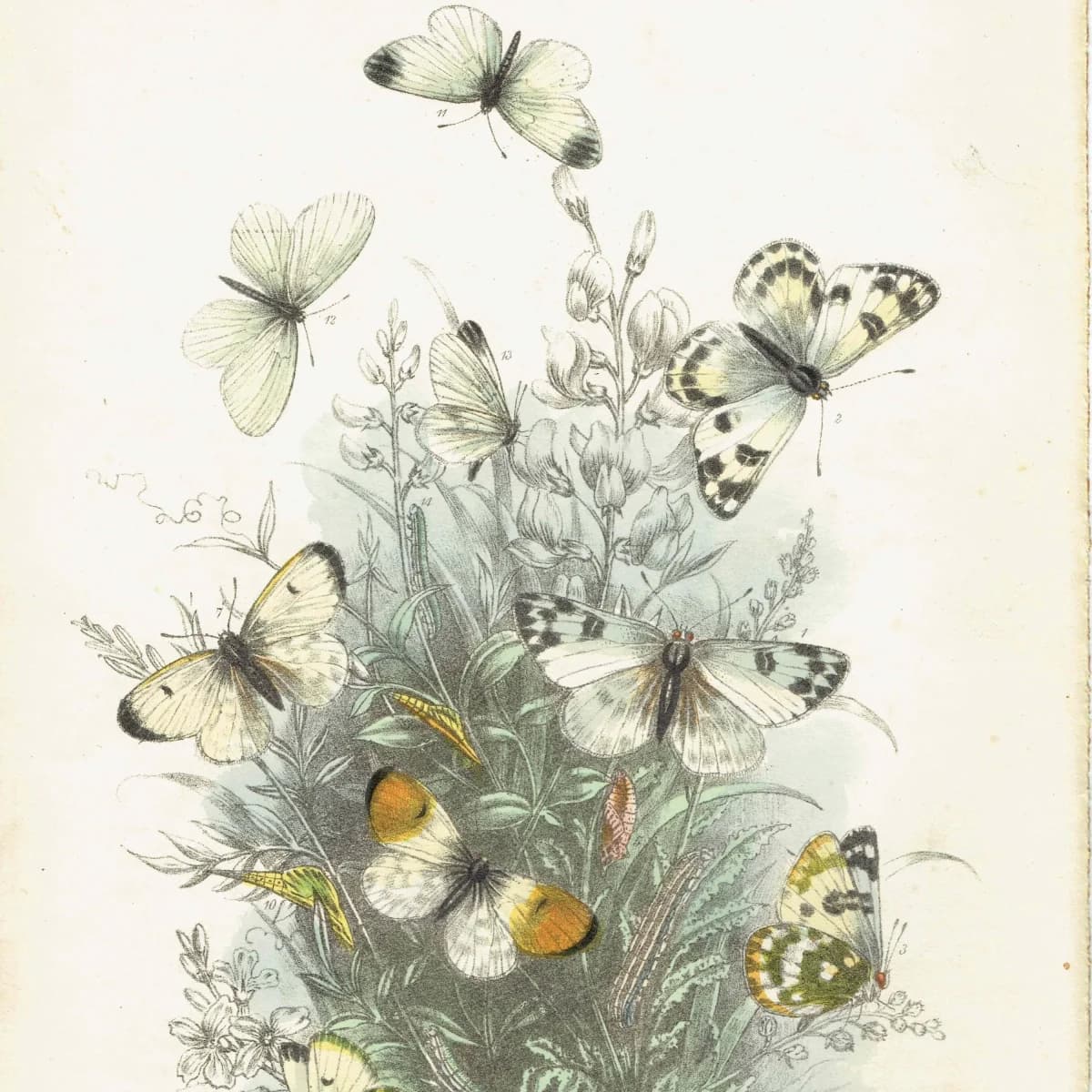
1859 Orange-tip & Wood White Butterfly - Original Antique Print By Humphreys - British Lepidoptera Chromolithograph Life Cycle - 7 x 10.4 in
7 x 10.4 in
19th Century
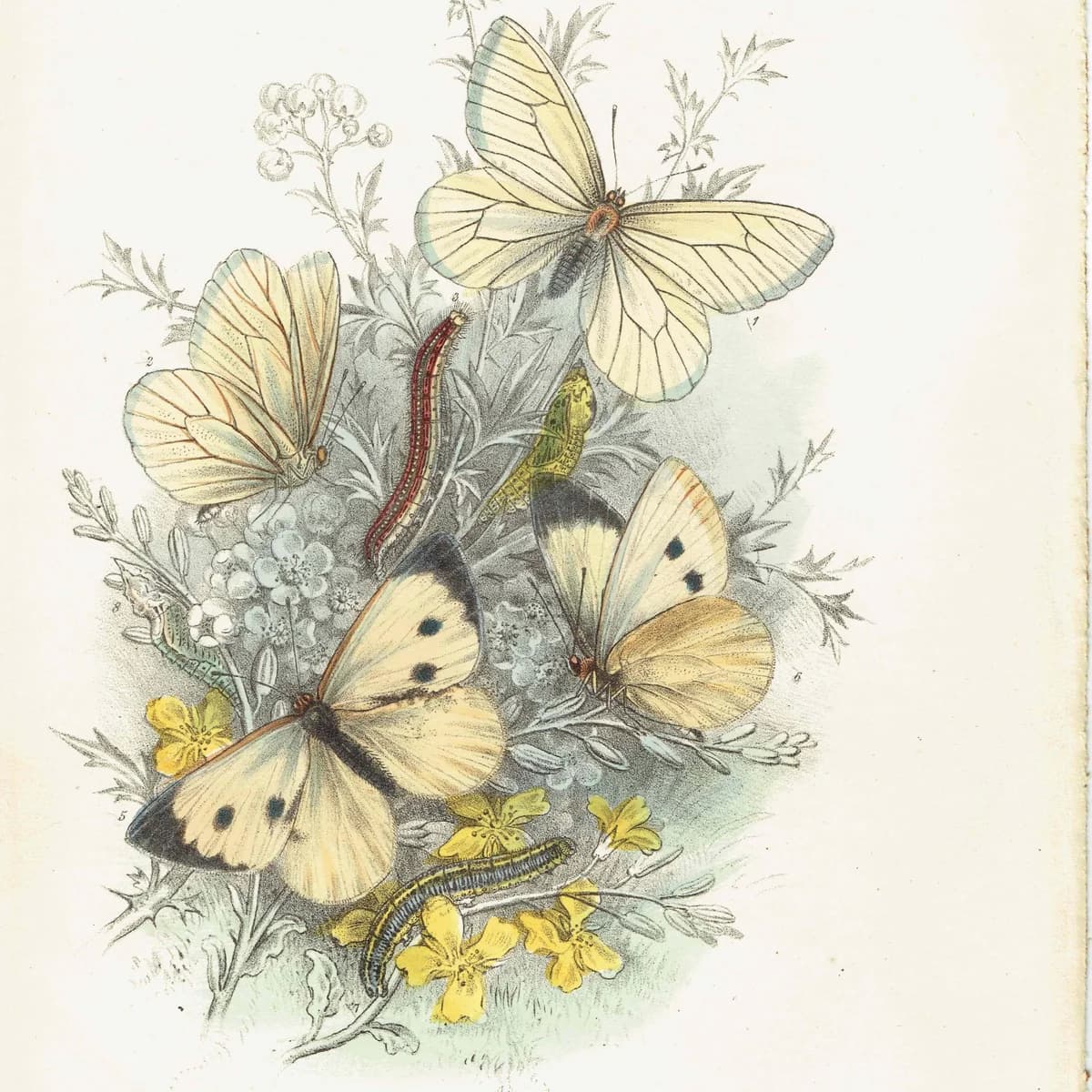
1859 Black-veined White & Great Cabbage White Butterflies - Hand-Coloured Lithograph, Henry Noel Humphreys, Plate III - 7 x 10.4 in
7 x 10.4 in
19th Century
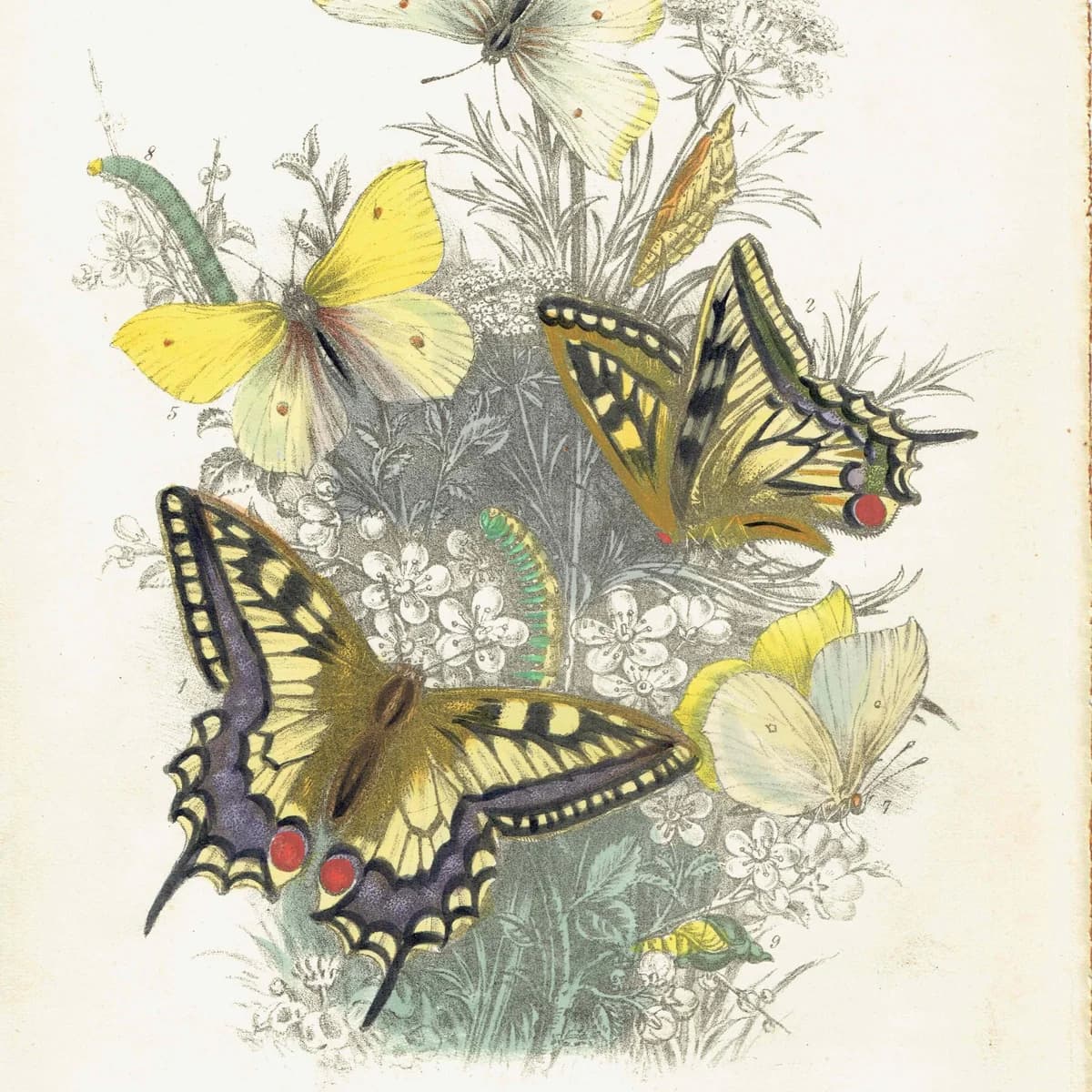
1859 Swallowtail & Brimstone Butterflies - Hand-Coloured Lithograph by Henry Noel Humphreys, Plate I - 7 x 10.4 in
7 x 10.4 in
19th Century
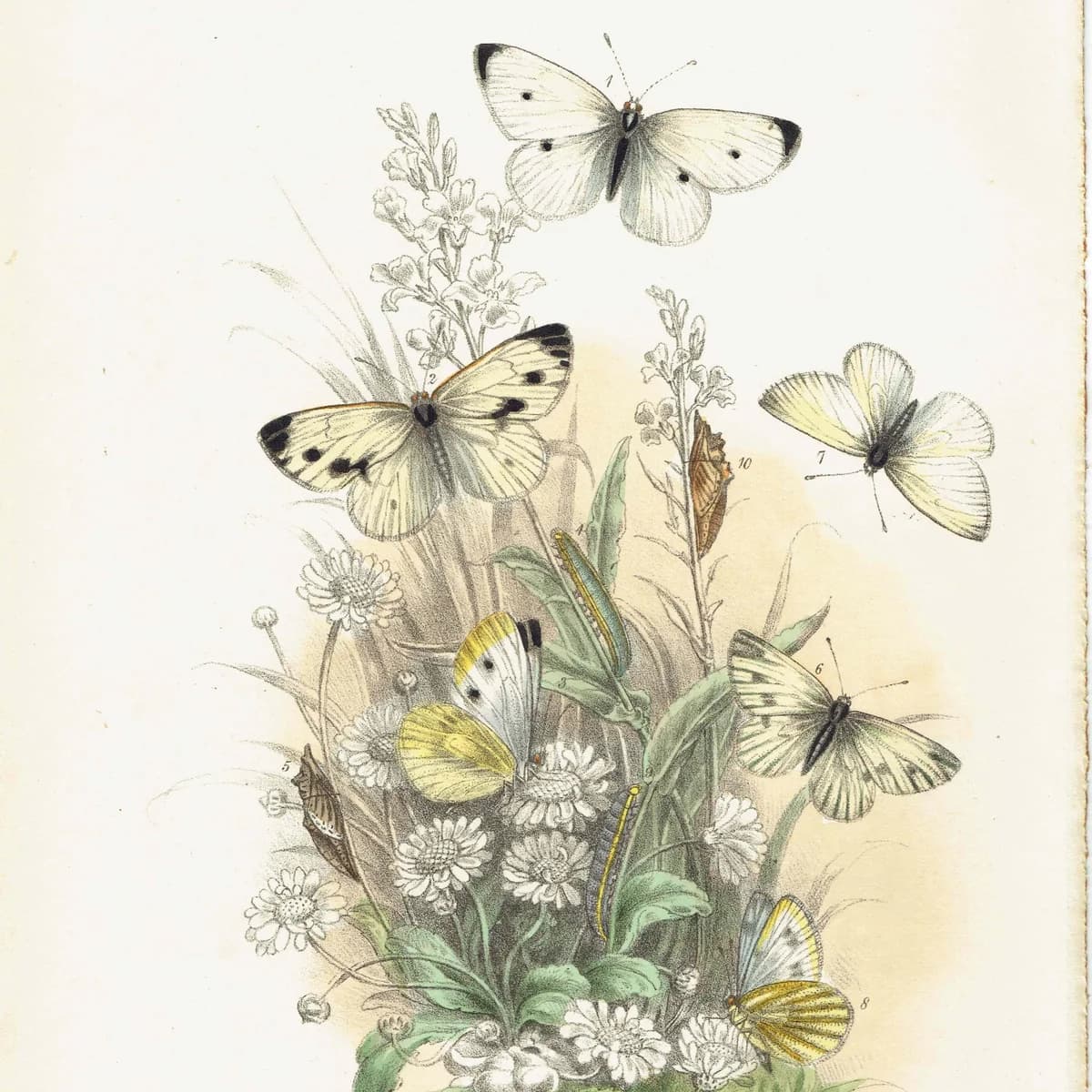
1859 Small Cabbage White & Green-veined White Butterflies - Hand-Coloured Lithograph, Henry Noel Humphreys, Plate IV - 7 x 10.4 in
7 x 10.4 in
19th Century

Antique White Water Lily Print – 1910s Hulme Botanical Illustration
Early 20th Century
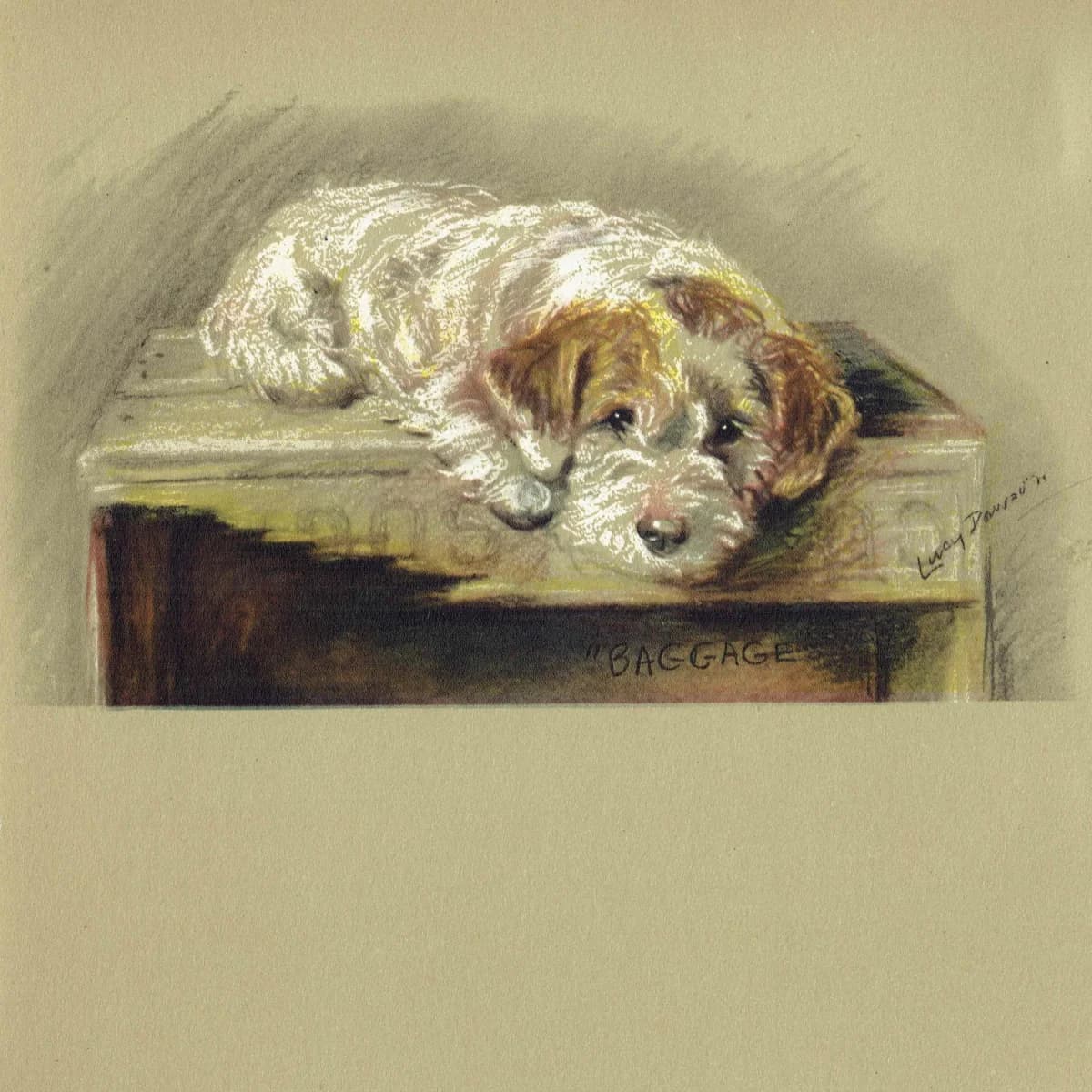
1946 Wire Fox Terrier 'Baggage' - Original Vintage Print By Dawson - Dog Portrait Pet Art Neighbours Lucy - 7 x 9.5 in
7 x 9.5 in
Mid 20th Century