

1 of 6
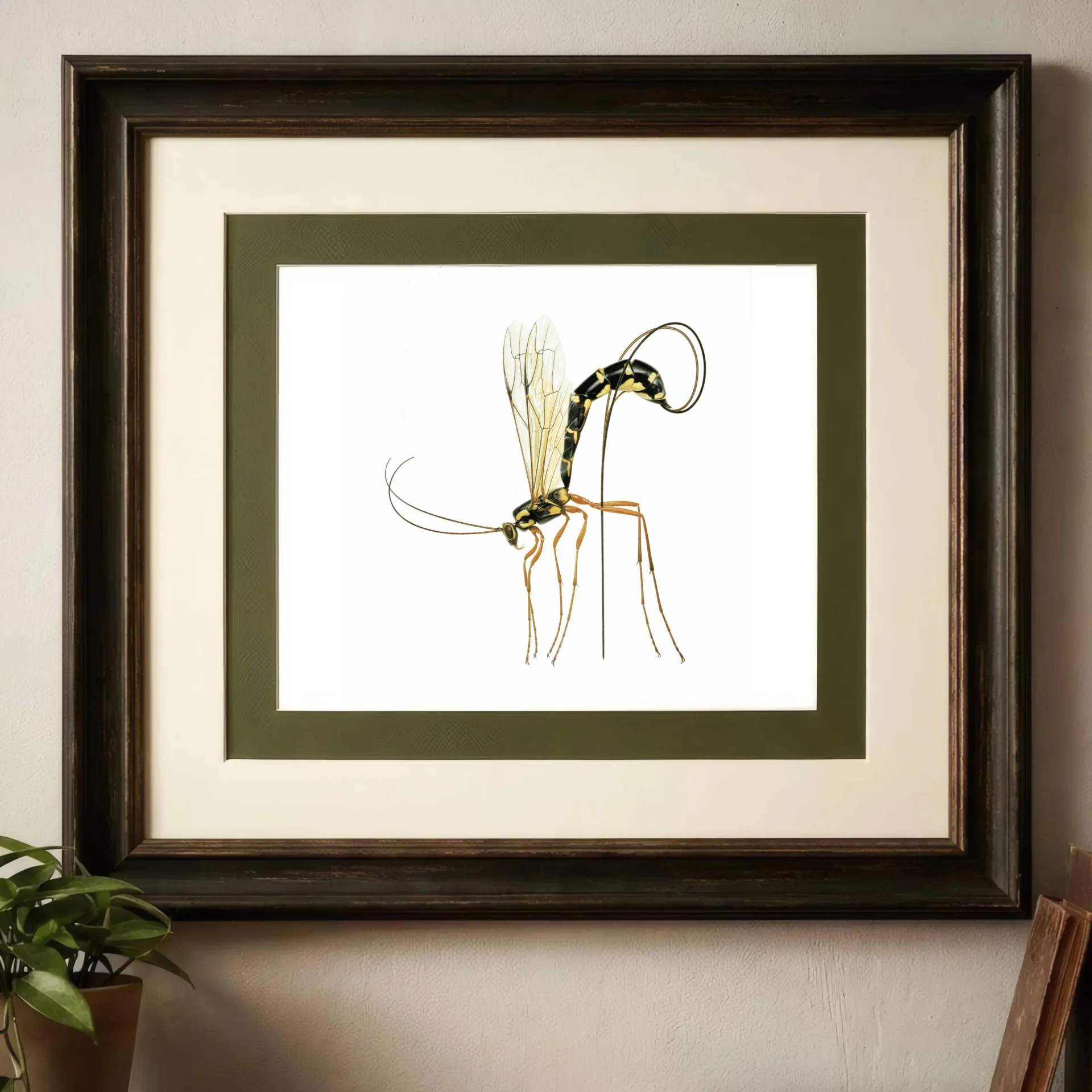
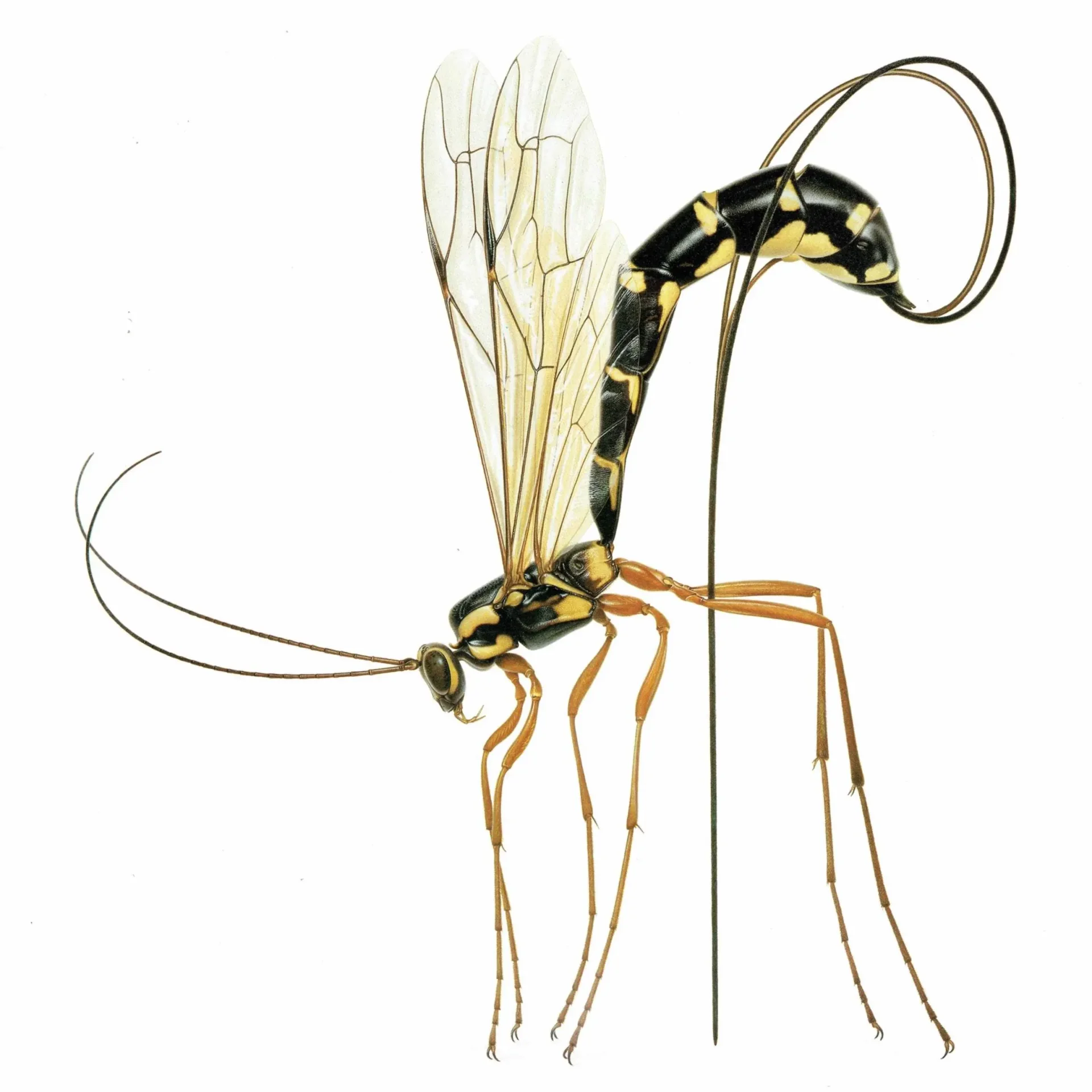
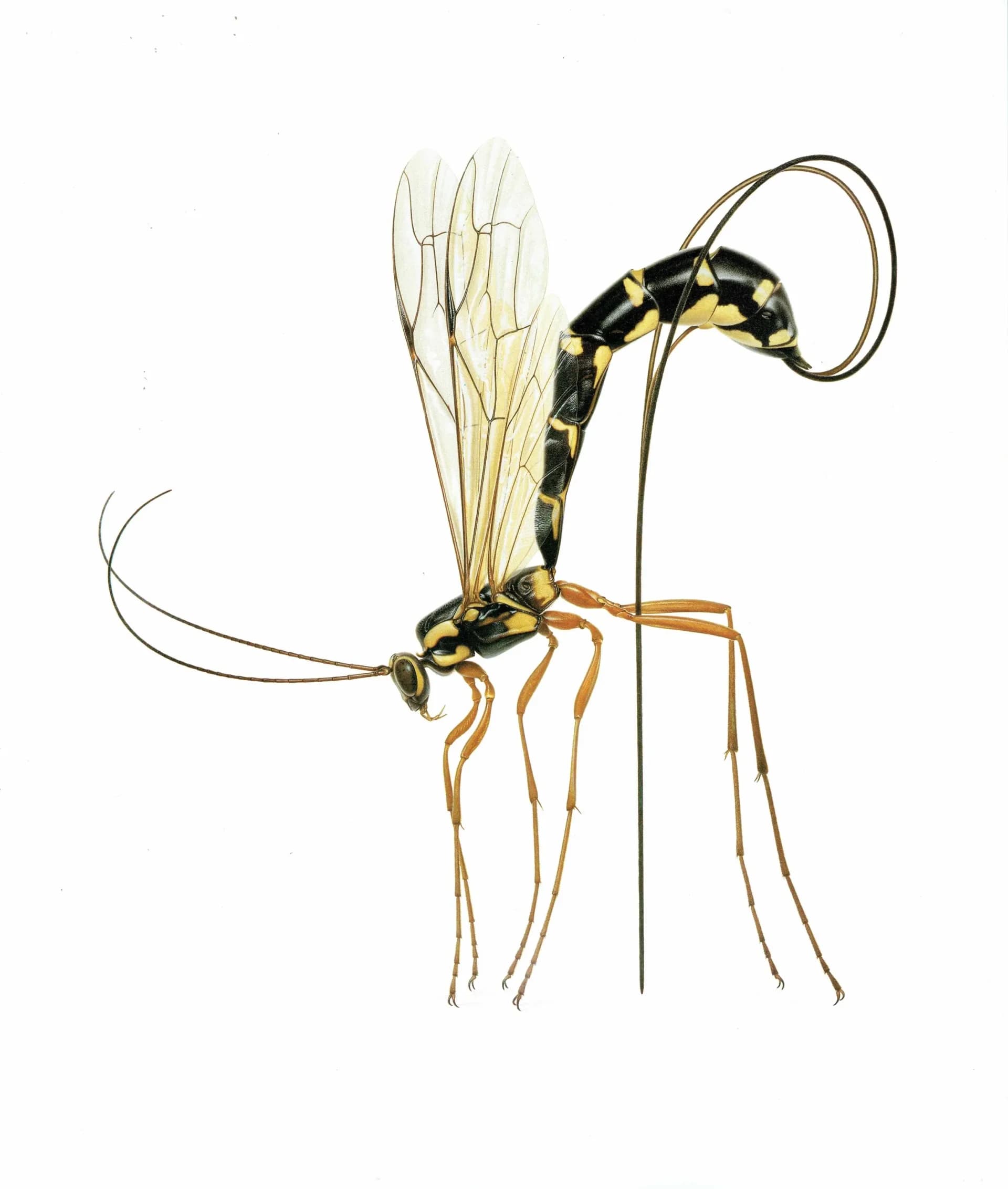
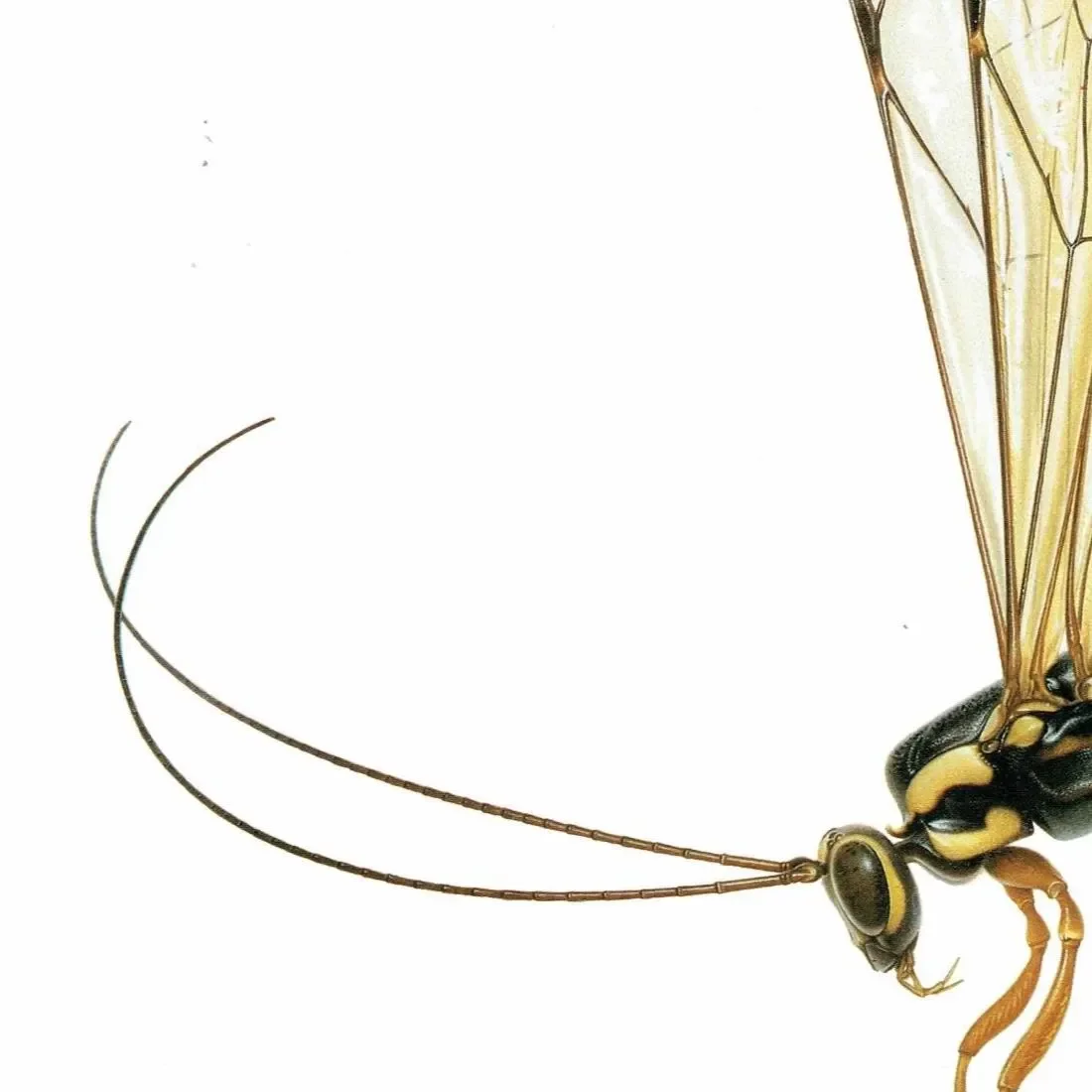
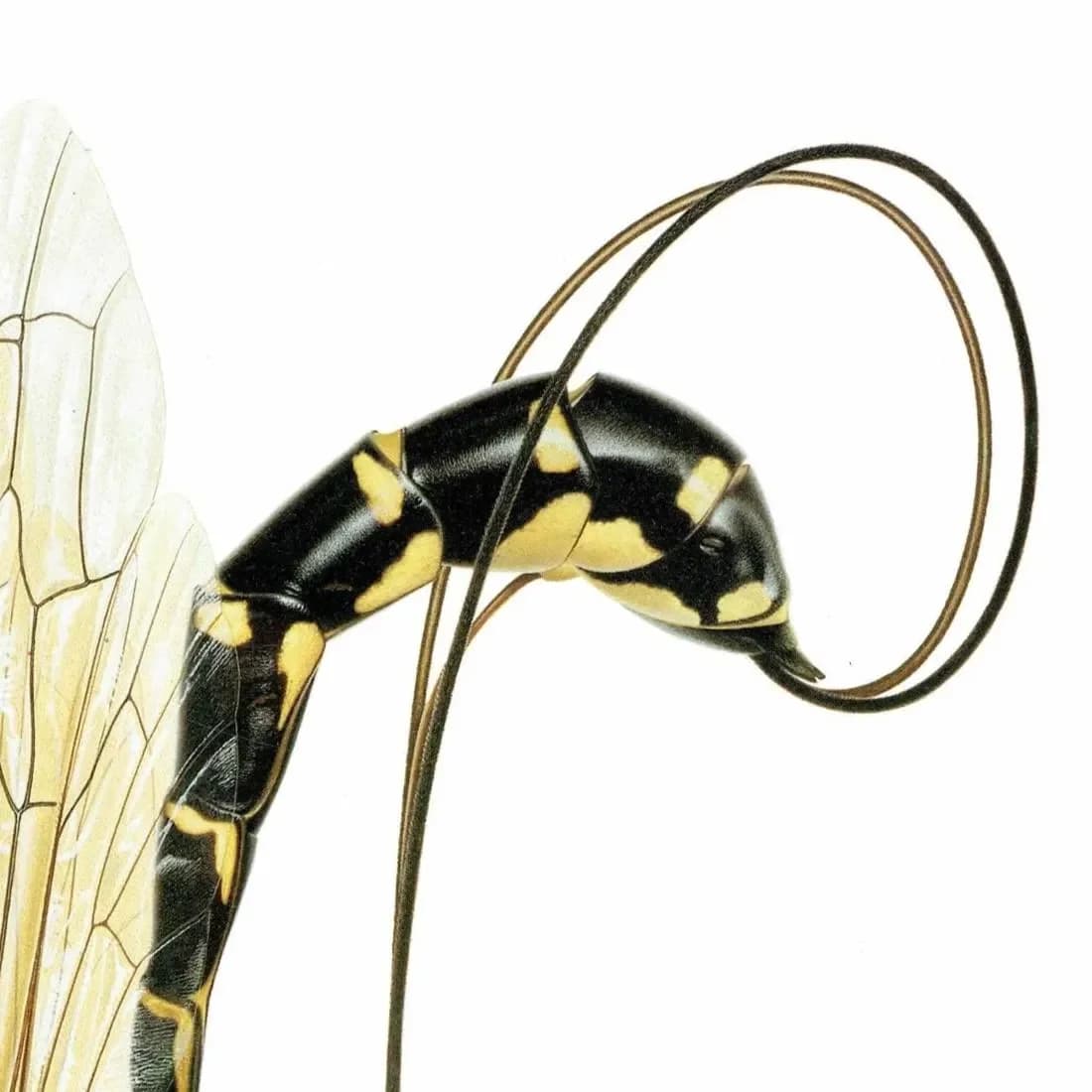
1986 Giant Ichneumon Wasp Rhyssa Persuasoria Print - Dupin Bernard Les Insectes Scientific Art - Linnaeus Carl Entomology - 11 x 13 in
This is a gorgeous high quality vintage print with vivid colours taken from a disbound copy of Les Insectes by Bernard Durin. The dimensions are 11 x 13 inches.
Visit https://www.etsy.com/uk/shop/ForestHillArtsHouse?section_id=53836226 for more Insects prints.
This insect print belongs to the order Hymenoptera. While species in this family of parasitic wasps tend to prefer the northern hemisphere, they are found all over the world, with over 20,000 known species. They bear the scientific name Ichneumonidae, derived from Greek, which means "tracker," a fitting name as the females truly track their hosts by tapping the surface with their antennae and sensing vibrations—somewhat like a cuckoo looking for a host nest—up to 6 cm deep.
The female of the species Rhyssa persuasoria, lays her egg with a long ovipositor that visually resembles a small flute antenna. This black and white striped animal is nearly 4 cm long, and its ovipositor is just as long or even longer, which is how the name arose: for depositing the egg deep into the host. The "headstand" helps with aiming. When the female has located her host—wood wasp larvae, which lie in wood—it drills into the wood with her ovipositor. If the host is a Urocerus gigas larva, as shown in our image, the wasp begins to drill using its ovipositor, which is as thin as a 1/10 mm hair. The ichneumon wasp drills slowly at first with vibrating movements of its legs and the ovipositor, then more quickly once it hits the tunnel of the wood wasp, almost like a dental drill. With astonishing precision, the ovipositor reaches the wood wasp larva, and an egg is laid on its body. The ichneumon larva hatches as a parasite inside the wood wasp larva and feeds on it. The host does not survive long, as the parasite first consumes all vital organs and uses the rest as food until it pupates.
The entomologist Carl Linnaeus (Linne) discovered and described Rhyssa persuasoria, commonly known as the sabre wasp. He named it in the 10th edition of his Systema Naturae in 1758. The species name persuasoria is attributed to him, indicating his role in its initial scientific classification.
**Background**
The artist Bernard Durin was an artist and illustrator transforming the tiniest creatures into works of art. Born in France in 1940, "Beetles and Other Insects," was published in 1980. It is considered a masterpiece. Durin has captured the intricate patterns, textures, and colours of his subjects with stunning accuracy. He made around 60 portraits of insects, using rare and fascinating specimens entrusted to him by the entomologists of the Museum of Natural History in Paris. Durin’s work combines scientific precision with artistic beauty. This has made them valuable to entomologists and other scientists. Bernard Durin passed away in 1988. His illustrations continue to be admired for their beauty and precision, and they remain a valuable resource for anyone interested in the natural world.
**About Your Purchase:**
- Your purchase is this ORIGINAL vintage print. No modern reprints, reproductions, or copies.
- Please note: This print is sold unmounted.
**Condition:** Good. Consistent with age. The reverse shows text in German. There is no show-through.
**Returns & Shipping**
- **Returns:** No-questions-asked within 14 days provided in the same condition as dispatched; buyer pays return shipping.
- **Packaging:** All prints are securely packaged in a clear bag with a board-backed envelope, further reinforced with recycled cardboard.
- Dispatched via Royal Mail Tracked 24/48 (and Royal Mail Tracked International) with:
- UK delivery within 1-3 days
- US/EU delivery within 5-12 days
- Rest-of-world delivery within 7-21 days
Product Details
About This Print
This original insects print dates from the Late 20th Century (1980s). Vintage prints capture the aesthetic sensibilities of their era with distinctive artistic styles.
Each print from Forest Hill Arts House is carefully inspected for condition and authenticity. We provide detailed provenance information and ship with protective packaging to ensure your print arrives in excellent condition.
Related Topics
sabre wasp printichneumonidae artrhyssa persuasoriaparasitic wasp artdurin insect printbernard durin artvintage wasp posterentomology decor
Need a Custom Mount for Your Print?
We offer precision machine-cut picture mounts to your exact specifications. Choose from conservation-grade or standard mount board options.
Order Custom MountsRelated Products
You might also be interested in these prints
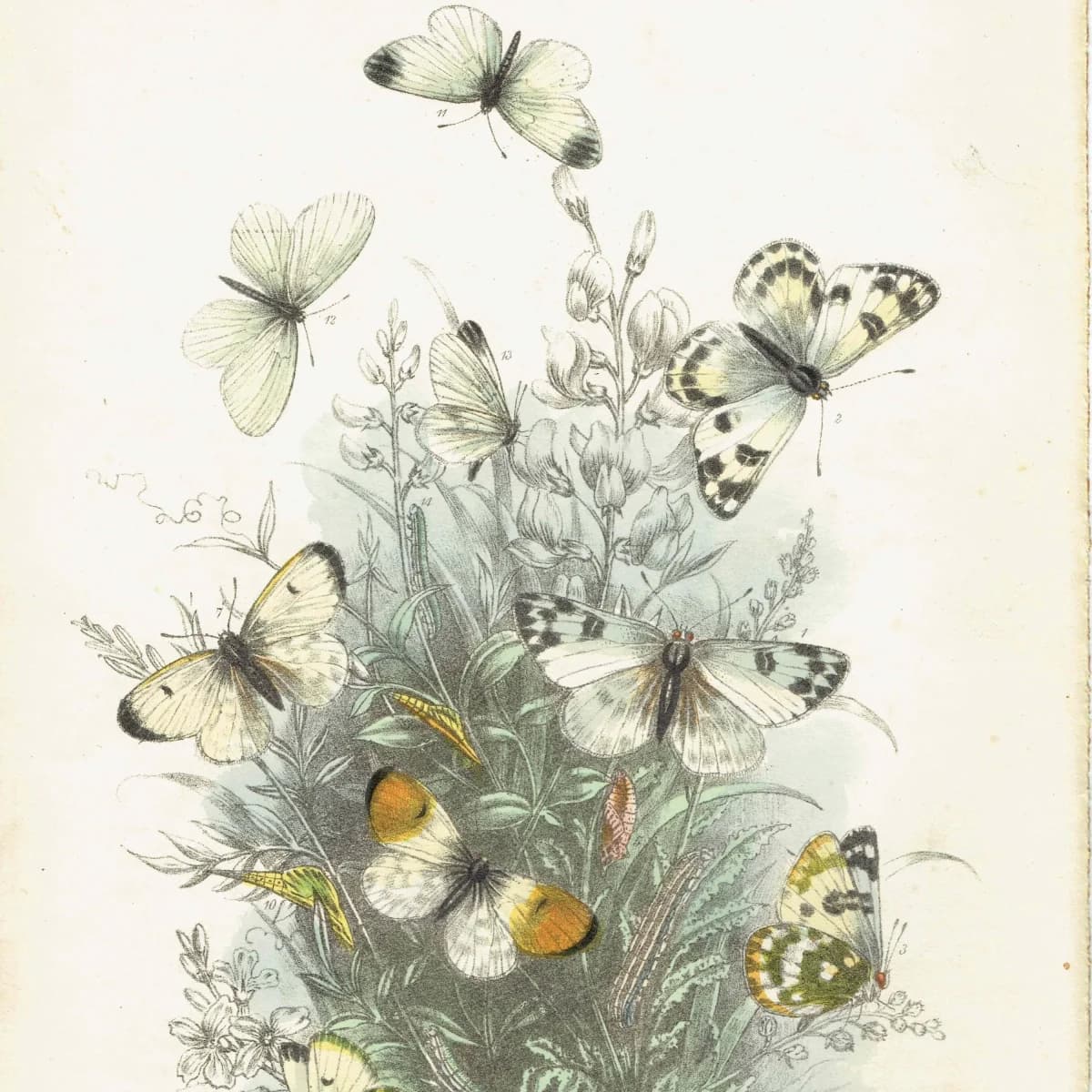
1859 Orange-tip & Wood White Butterfly - Original Antique Print By Humphreys - British Lepidoptera Chromolithograph Life Cycle - 7 x 10.4 in
7 x 10.4 in
19th Century
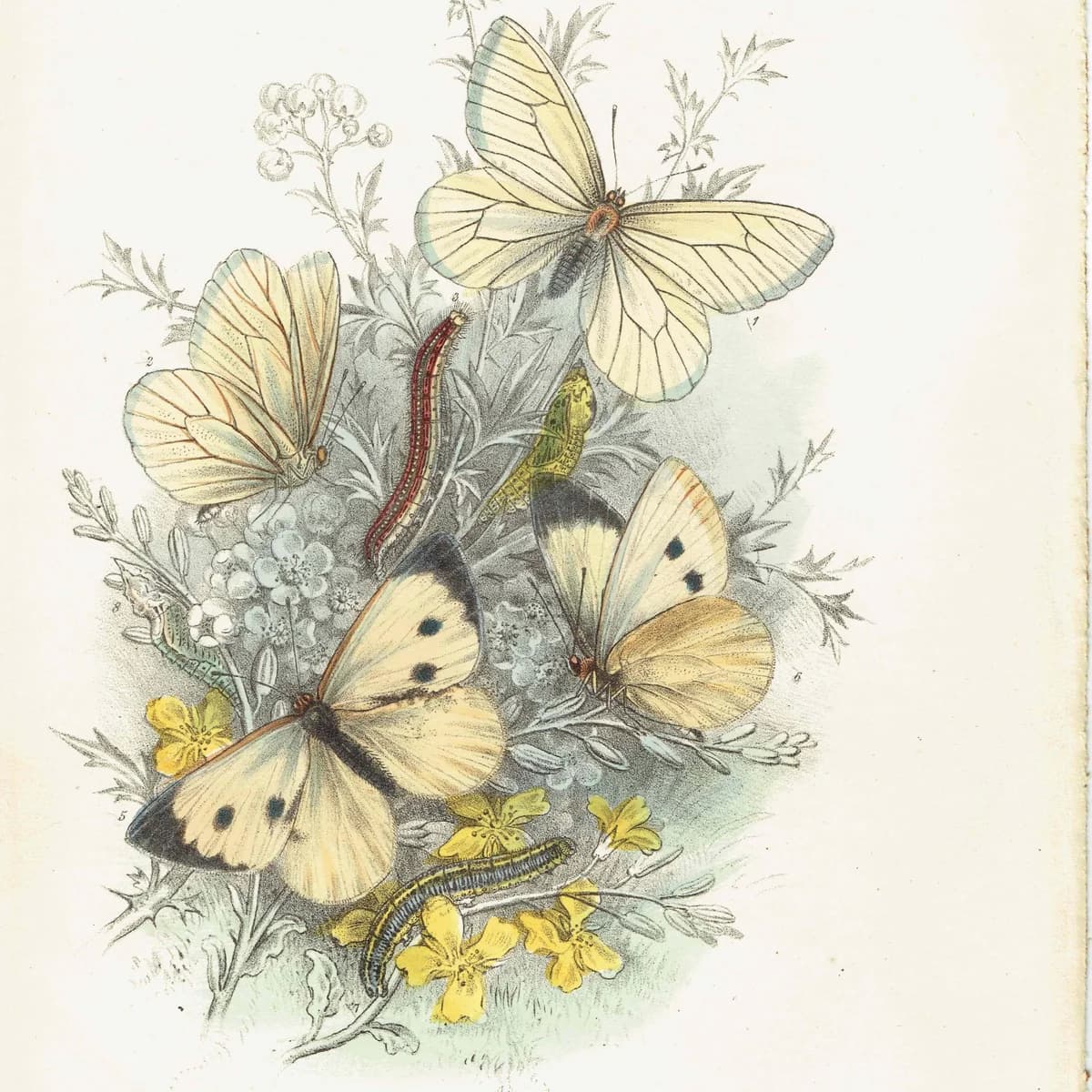
1859 Black-veined White & Great Cabbage White Butterflies - Hand-Coloured Lithograph, Henry Noel Humphreys, Plate III - 7 x 10.4 in
7 x 10.4 in
19th Century
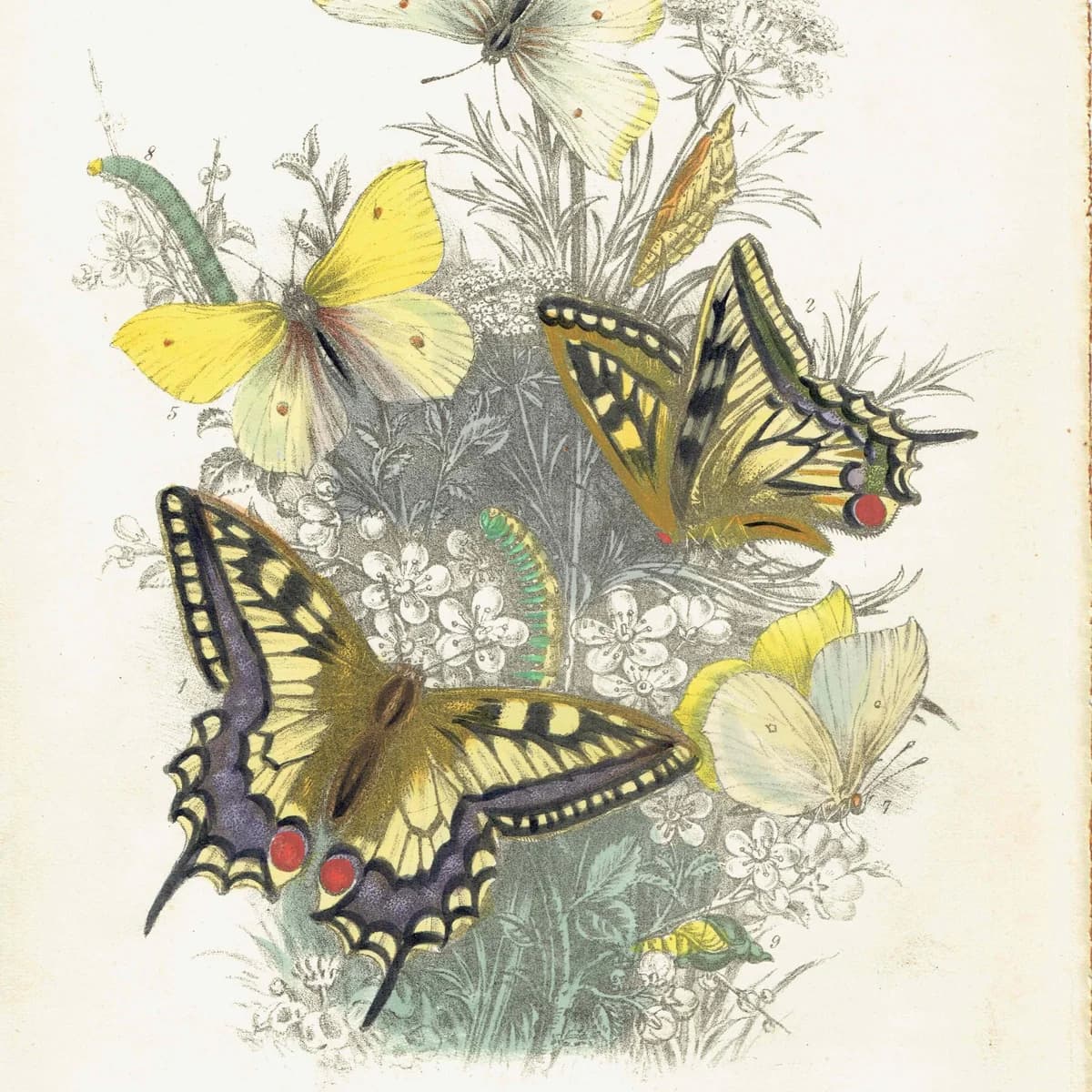
1859 Swallowtail & Brimstone Butterflies - Hand-Coloured Lithograph by Henry Noel Humphreys, Plate I - 7 x 10.4 in
7 x 10.4 in
19th Century
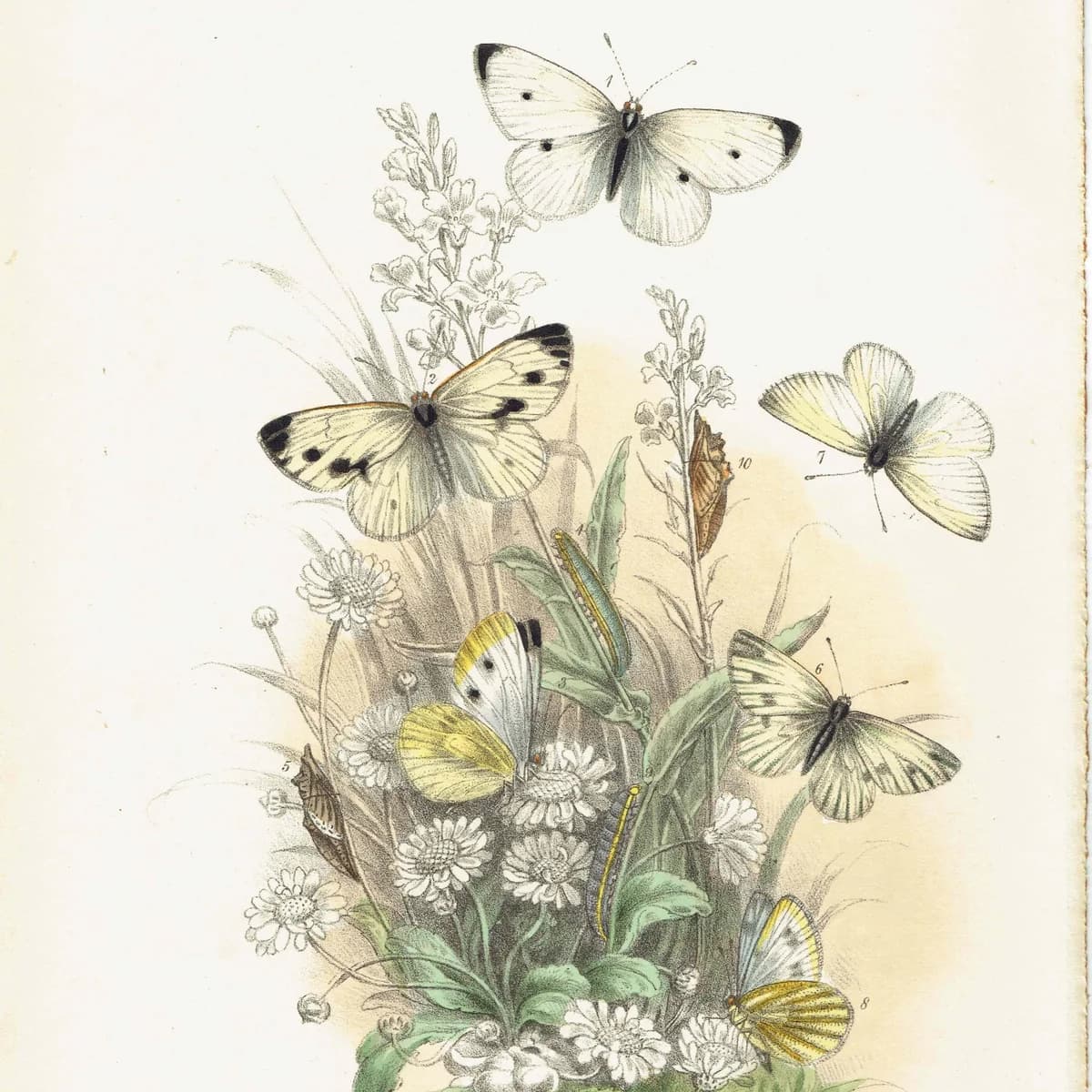
1859 Small Cabbage White & Green-veined White Butterflies - Hand-Coloured Lithograph, Henry Noel Humphreys, Plate IV - 7 x 10.4 in
7 x 10.4 in
19th Century
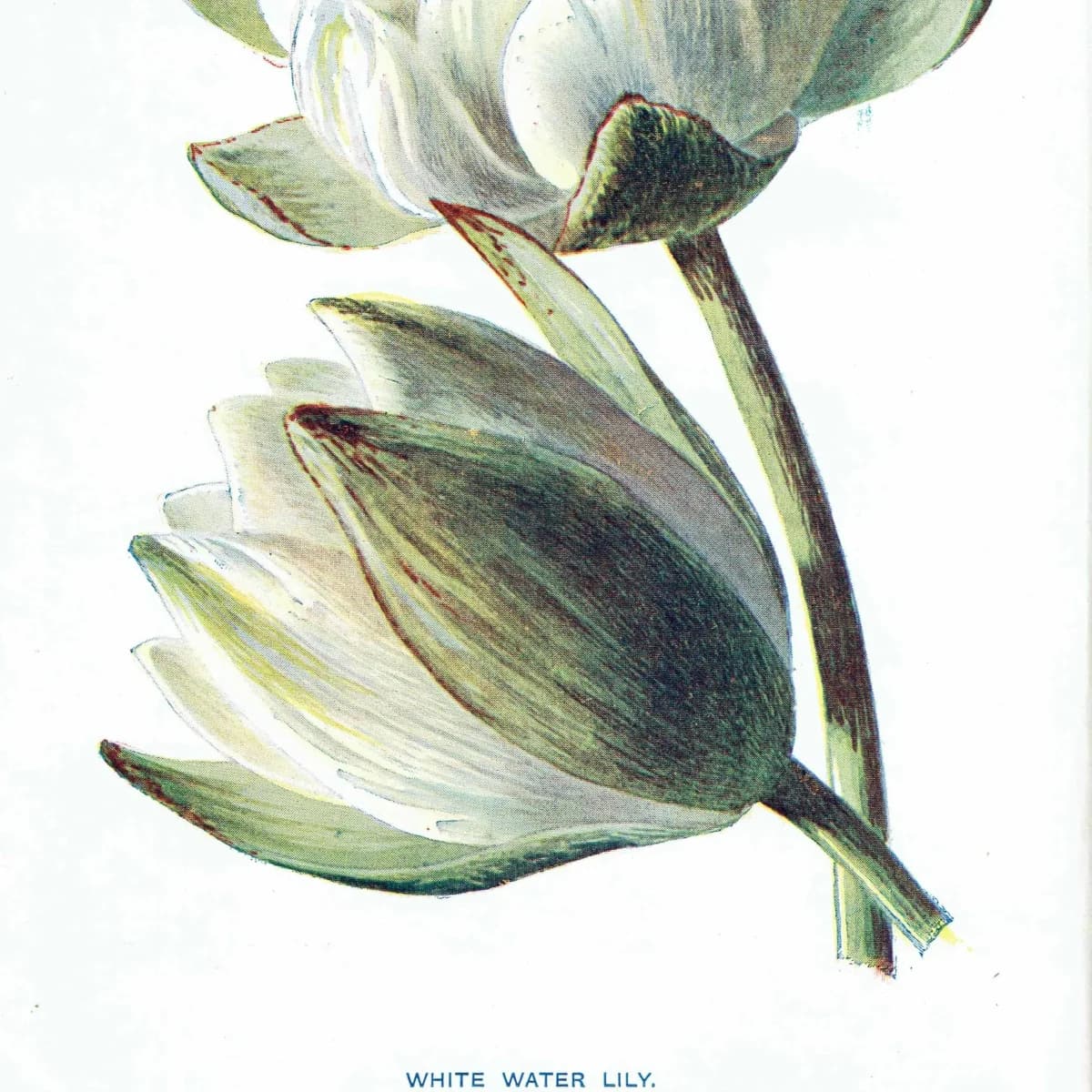
Antique White Water Lily Print – 1910s Hulme Botanical Illustration
Early 20th Century
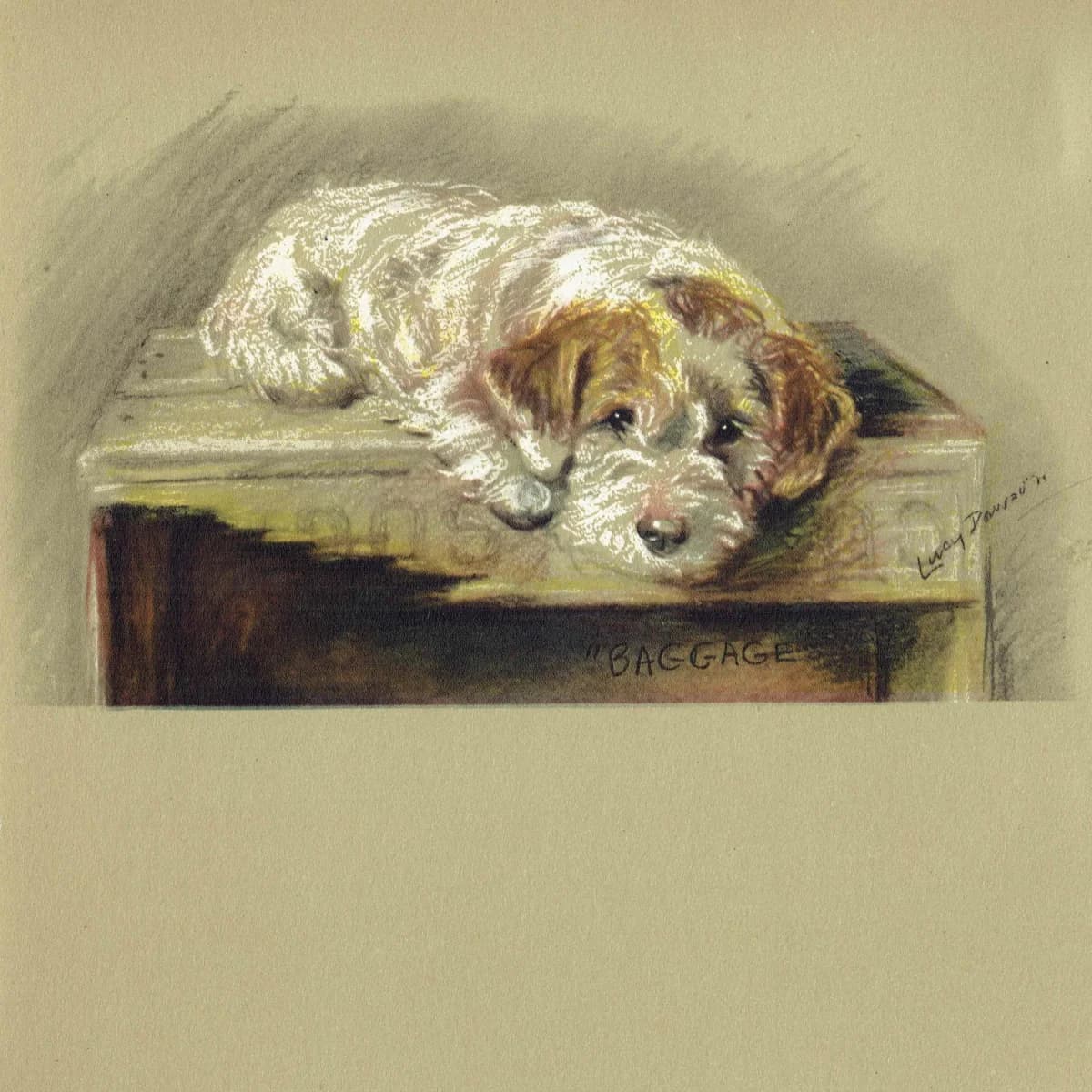
1946 Wire Fox Terrier 'Baggage' - Original Vintage Print By Dawson - Dog Portrait Pet Art Neighbours Lucy - 7 x 9.5 in
7 x 9.5 in
Mid 20th Century