

1 of 6
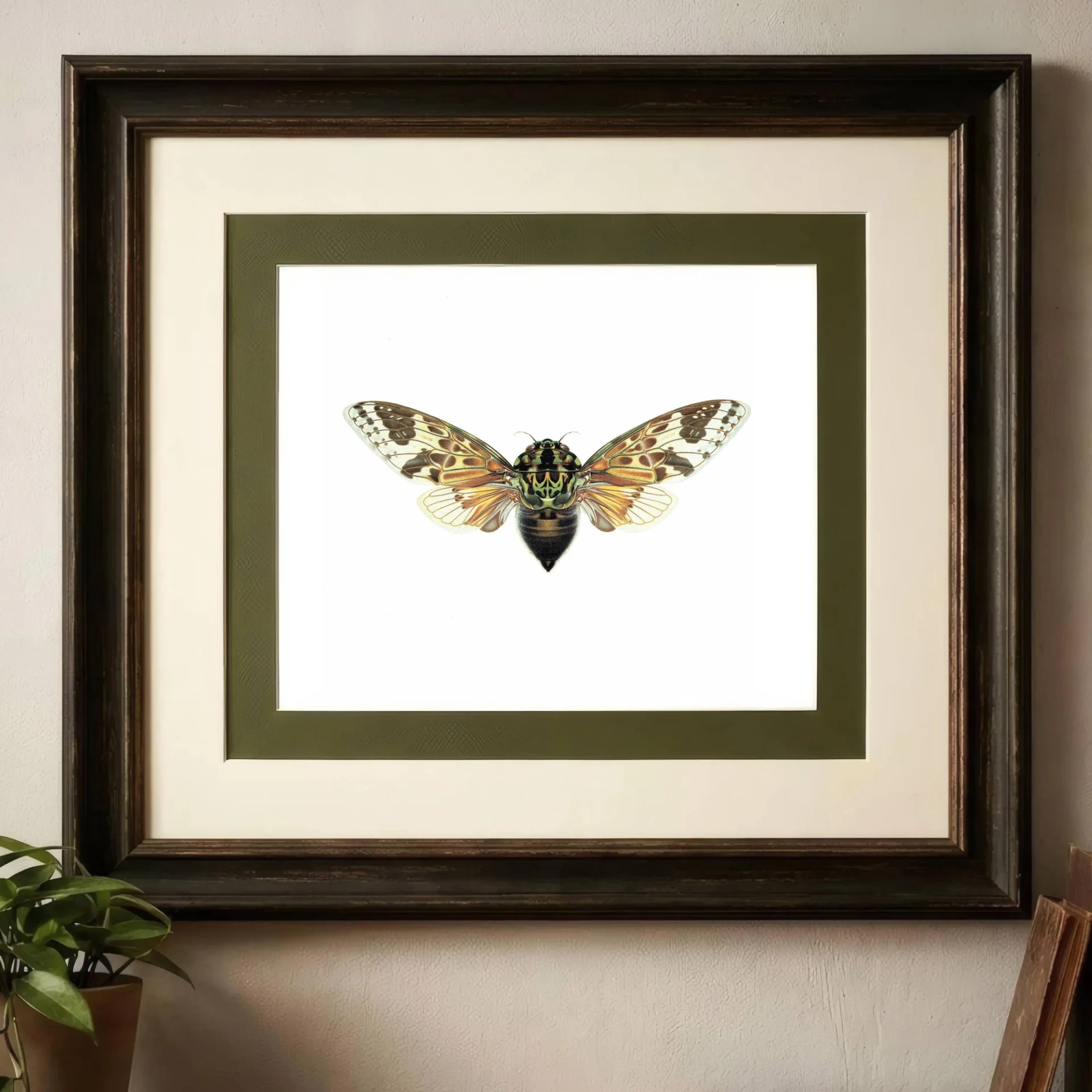
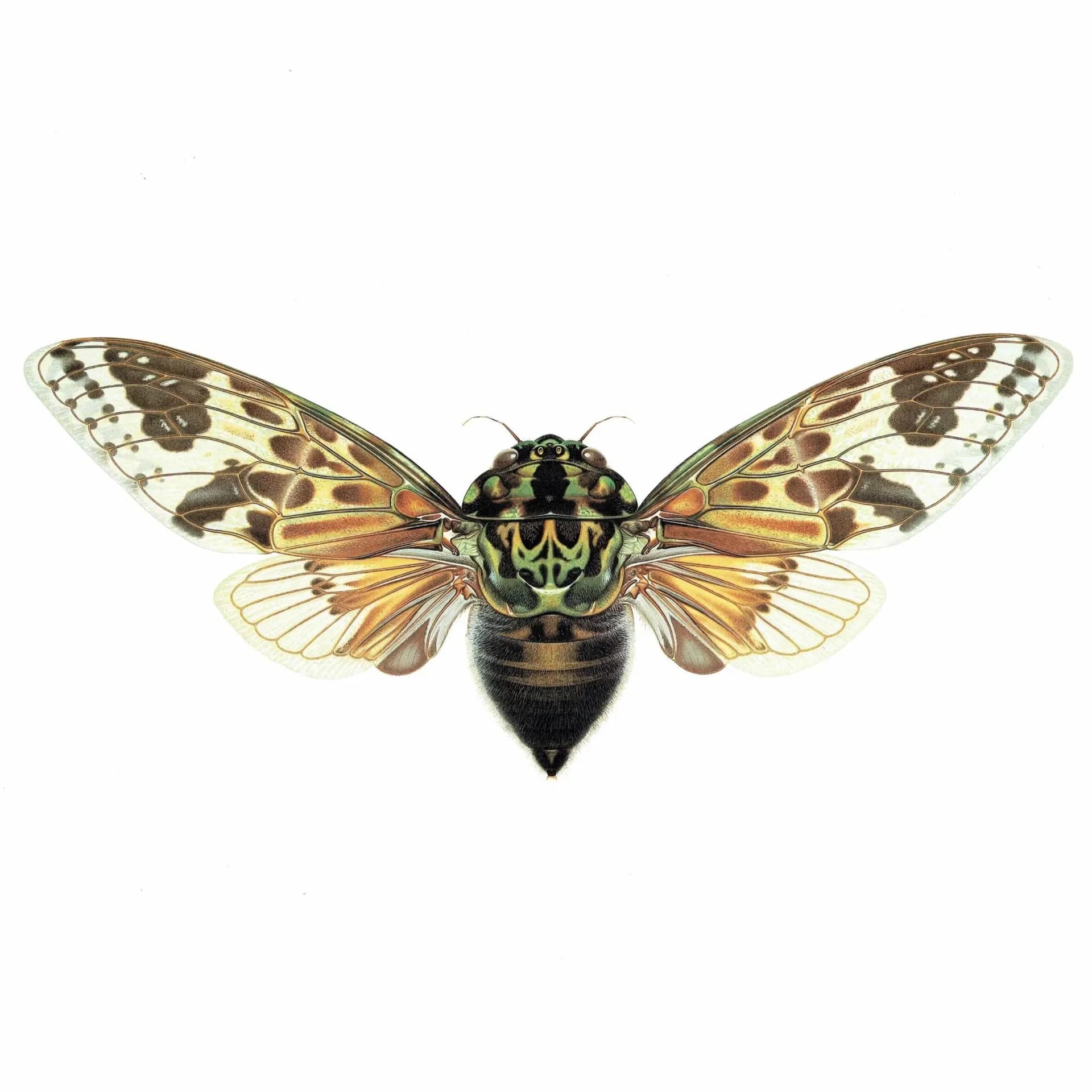
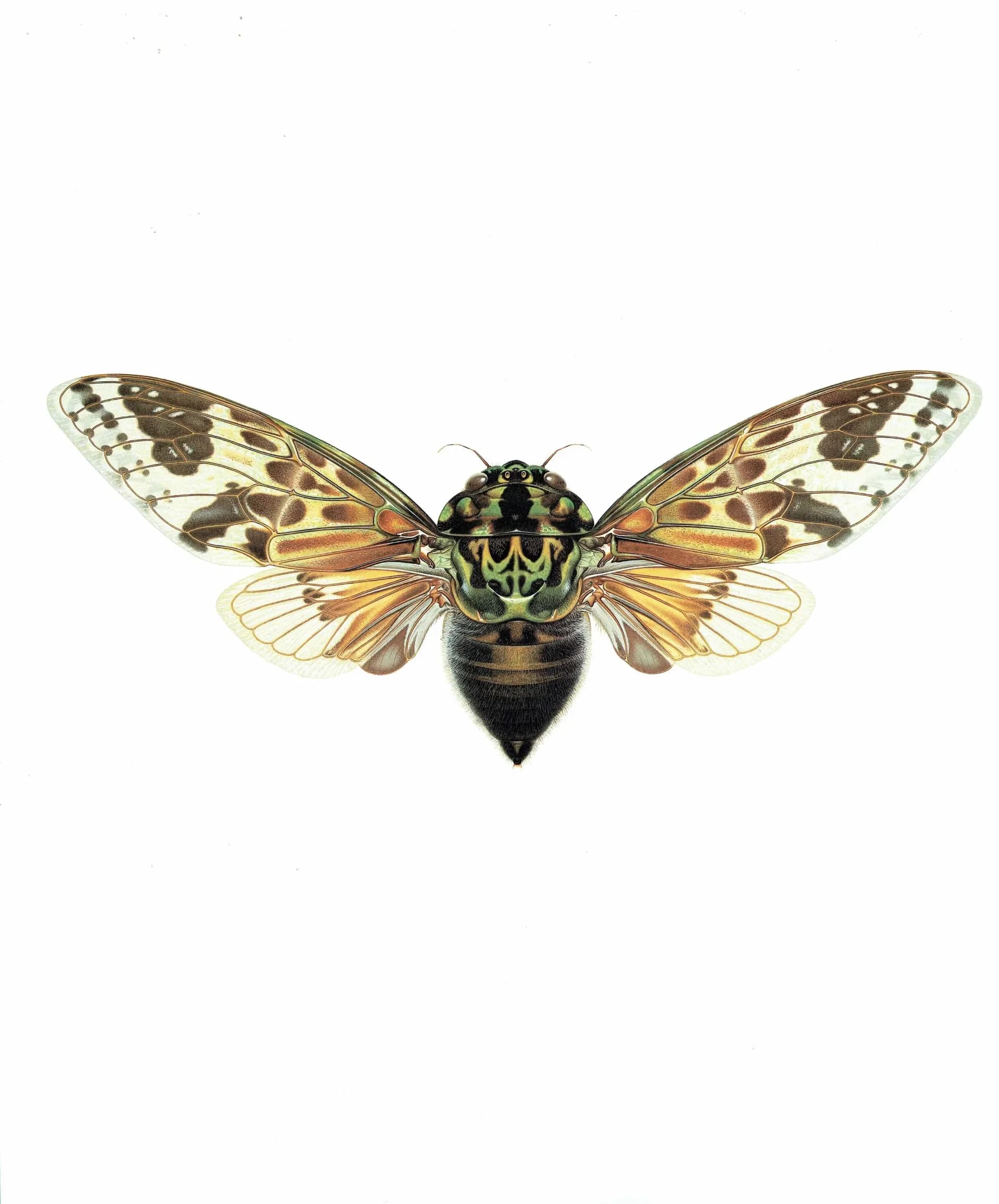
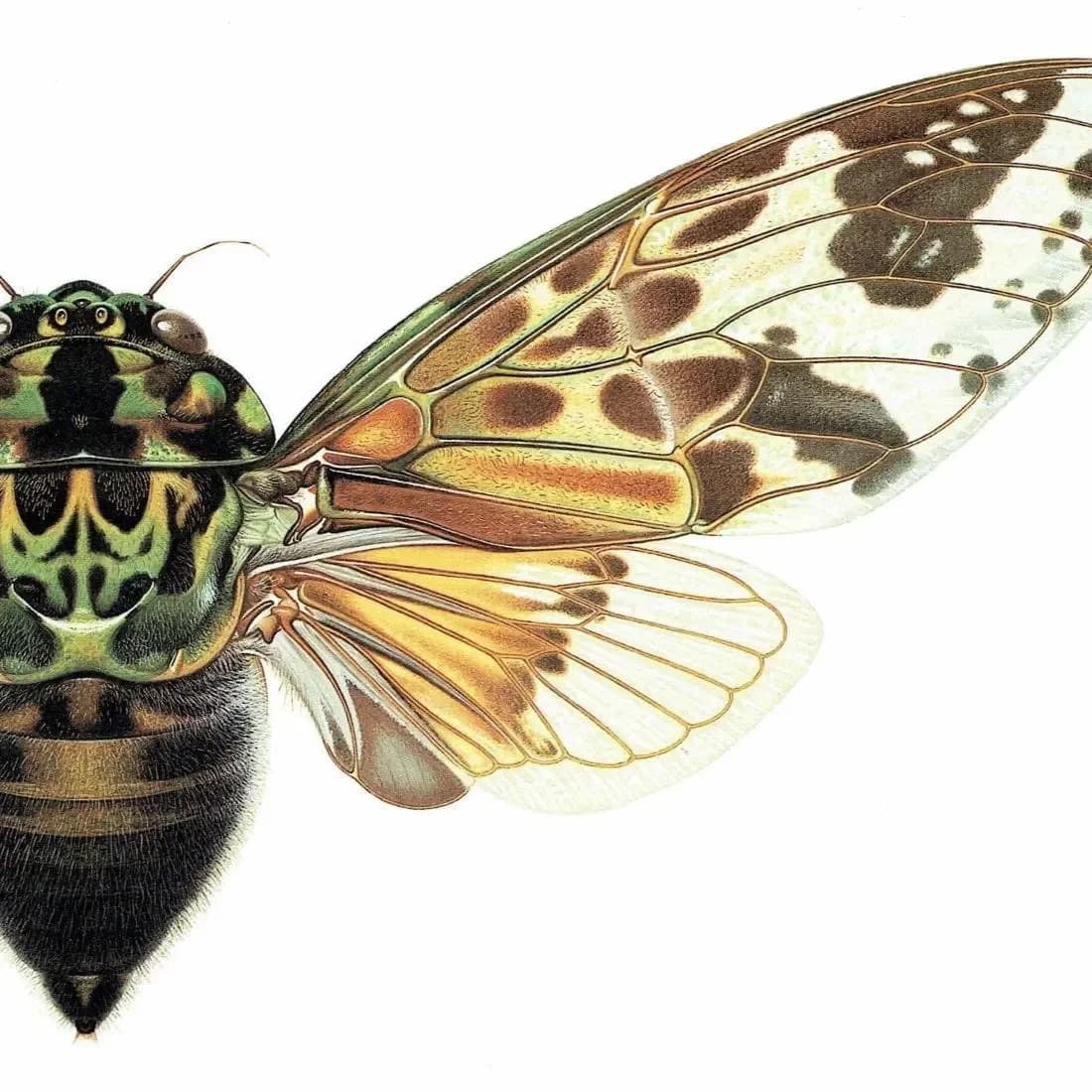
1986 Mana Cicada Pycna Antinoirii Print - Durin Bernard Scientific Illustration - Lethierry Entomology - 11 x 13 in
This is a gorgeous high quality vintage print with vivid colours taken from a disbound copy of Les Insectes by Bernard Durin. The dimensions are 11 x 13 inches.
Visit https://www.etsy.com/uk/shop/ForestHillArtsHouse?section_id=53836226 for more Insects prints.
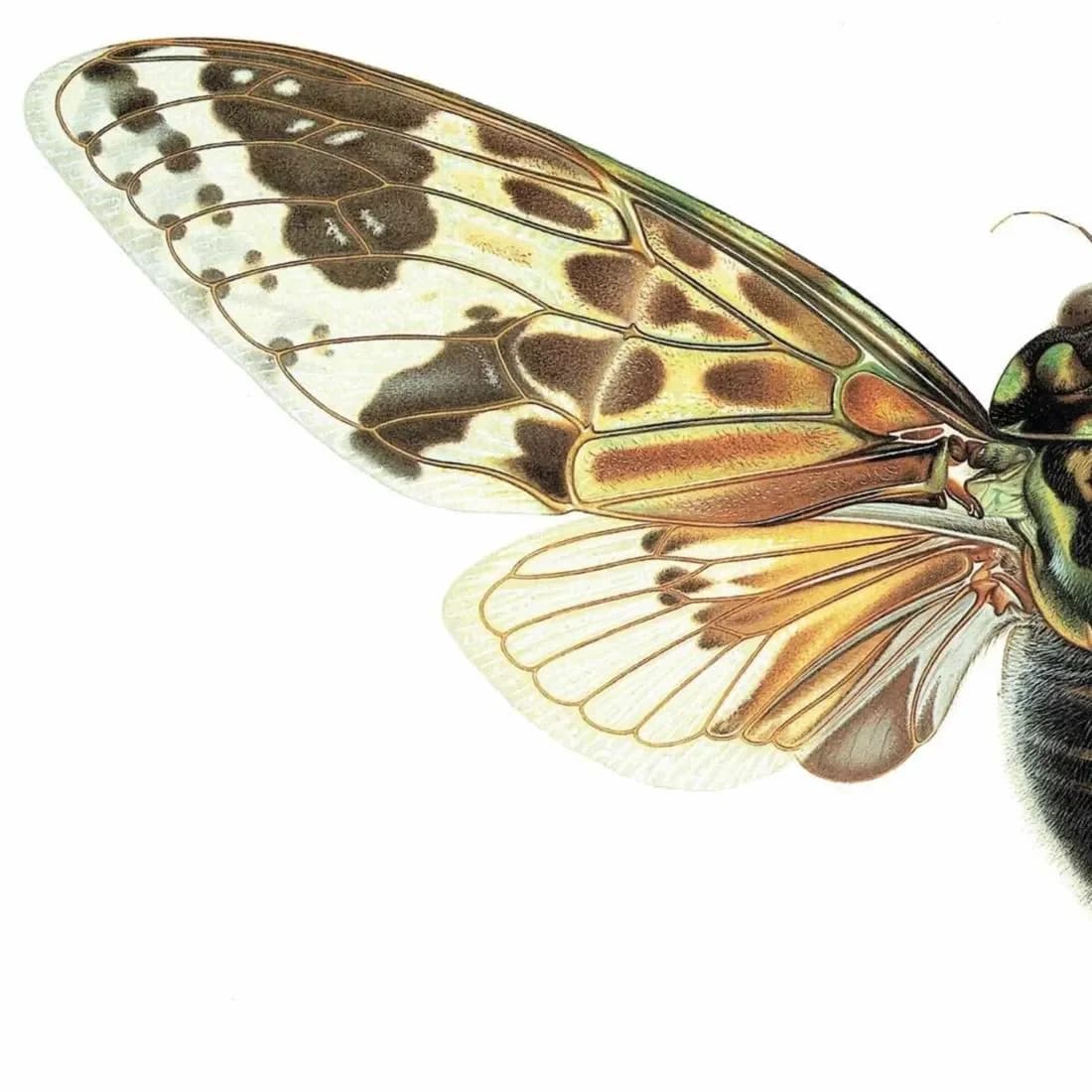
The print shows the wings of the cicada in flight. They are arranged like a roof over its abdomen when at rest. The short, bristle-like antennae and the homogeneously structured forewings indicate that this insect belongs to the Homoptera, which feed on plant sap. It has a sucking organ, the rostrum, which it uses to pierce plants and then draw out their sap. This species lives in Africa, preferring, like most cicadas, the hottest regions.
They perch on the sunny side of trees, moving along branches and twigs with the sun. They fear drought, as they cannot afford to lose liquids. Thanks to their rostrum with stylets, they extract abundant sap from trees. Naturally generous, they leave some behind for other insects, especially ants, who feed on the sugar-rich droppings, or honeydew. This honeydew is a delicacy for many other insects. Cicadas, like aphids, may also drop from trees the most abundant honeydew.
The males are known for their calls—extremely loud and continuous. In ancient Greece, cicadas were kept in cages, and their songs were cherished. A cicada playing the harp was a symbol of music or, at times, a sign of an all-male choir. The Athenians often adorned their hair with small pins representing cicadas. They also appeared on cameos and coins.
Until recently, the Chinese would carry them in small cages. In China, they served as decorative motifs and appeared on sacred bronzes from the Chang dynasty (1450–1050 B.C.). Under the Han dynasty (200 B.C.–200 A.D.), they were buried with the dead, like the Egyptian scarab, as a symbol of resurrection. This was because the larva, upon completing its nymph stage, emerges from the ground and climbs a tree—at which point it molts, and its “celestial life” begins.
Classified by Lucien François Lethierry
**Background**
The artist Bernard Durin was an artist and illustrator transforming the tiniest creatures into works of art. Born in France in 1940, "Beetles and Other Insects," was published in 1980. It is considered a masterpiece. Durin has captured the intricate patterns, textures, and colours of his subjects with stunning accuracy. He made around 60 portraits of insects, using rare and fascinating specimens entrusted to him by the entomologists of the Museum of Natural History in Paris. Durin’s work combines scientific precision with artistic beauty. This has made them valuable to entomologists and other scientists. Bernard Durin passed away in 1988. His illustrations continue to be admired for their beauty and precision, and they remain a valuable resource for anyone interested in the natural world.
**About Your Purchase:**
- Your purchase is this ORIGINAL vintage print. No modern reprints, reproductions, or copies.
- Please note: This print is sold unmounted.
**Condition:** Good. Consistent with age. The reverse shows text in German. There is no show-through
**Returns & Shipping**
- **Returns:** No-questions-asked within 14 days provided in the same condition as dispatched; buyer pays return shipping.
- **Packaging:** All prints are securely packaged in a clear bag with a board-backed envelope, further reinforced with recycled cardboard.
- Dispatched via Royal Mail Tracked 24/48 (and Royal Mail Tracked International) with:
- UK delivery within 1-3 days
- US/EU delivery within 5-12 days
- Rest-of-world delivery within 7-21 days
Product Details
About This Print
This original insects print dates from the Late 20th Century (1980s). Vintage prints capture the aesthetic sensibilities of their era with distinctive artistic styles.
Each print from Forest Hill Arts House is carefully inspected for condition and authenticity. We provide detailed provenance information and ship with protective packaging to ensure your print arrives in excellent condition.
Related Topics
cicada printhomoptera artafrican cicadaplant sap insectdurin insect printvintage bug artbernard durin artentomology decor
Need a Custom Mount for Your Print?
We offer precision machine-cut picture mounts to your exact specifications. Choose from conservation-grade or standard mount board options.
Order Custom MountsRelated Products
You might also be interested in these prints
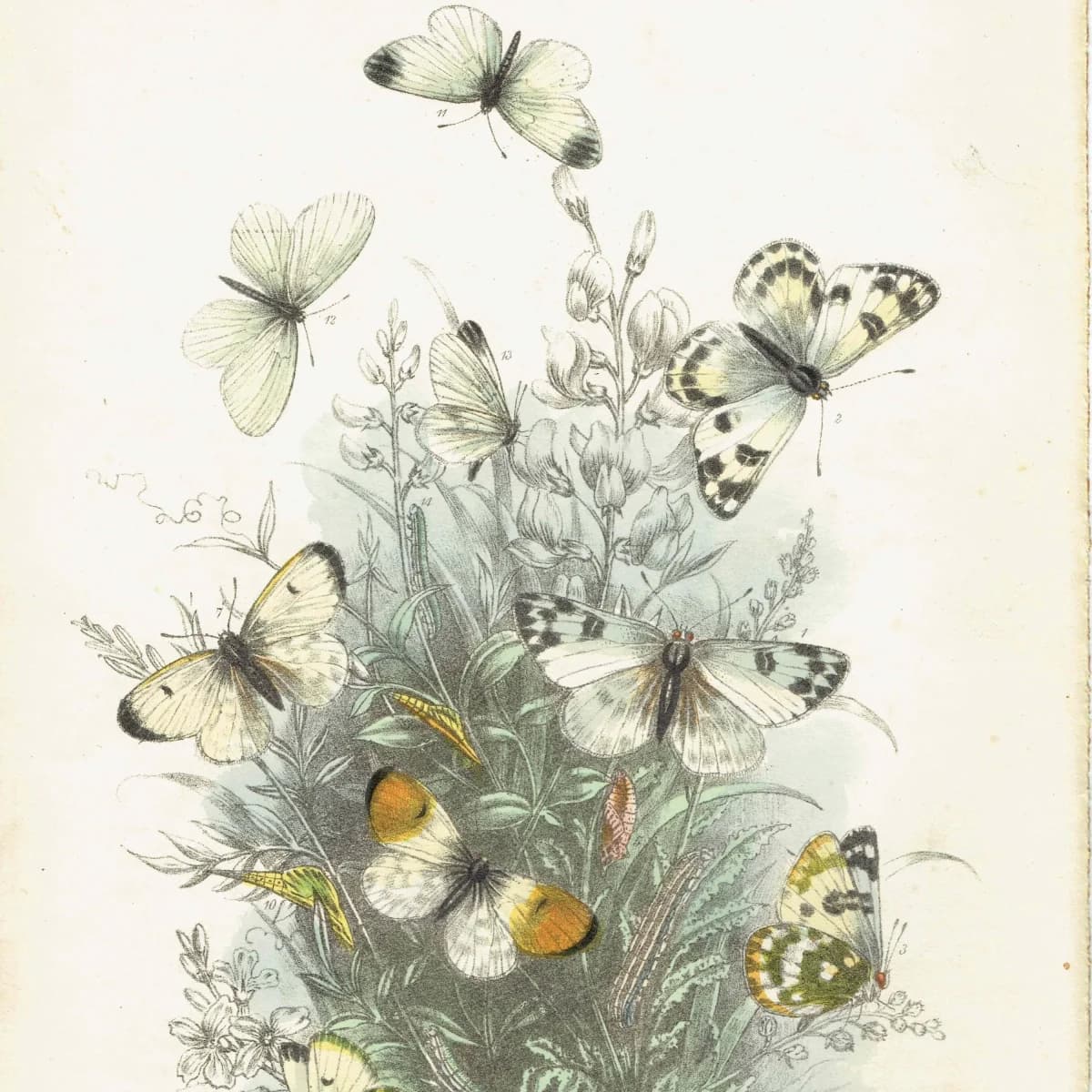
1859 Orange-tip & Wood White Butterfly - Original Antique Print By Humphreys - British Lepidoptera Chromolithograph Life Cycle - 7 x 10.4 in
7 x 10.4 in
19th Century
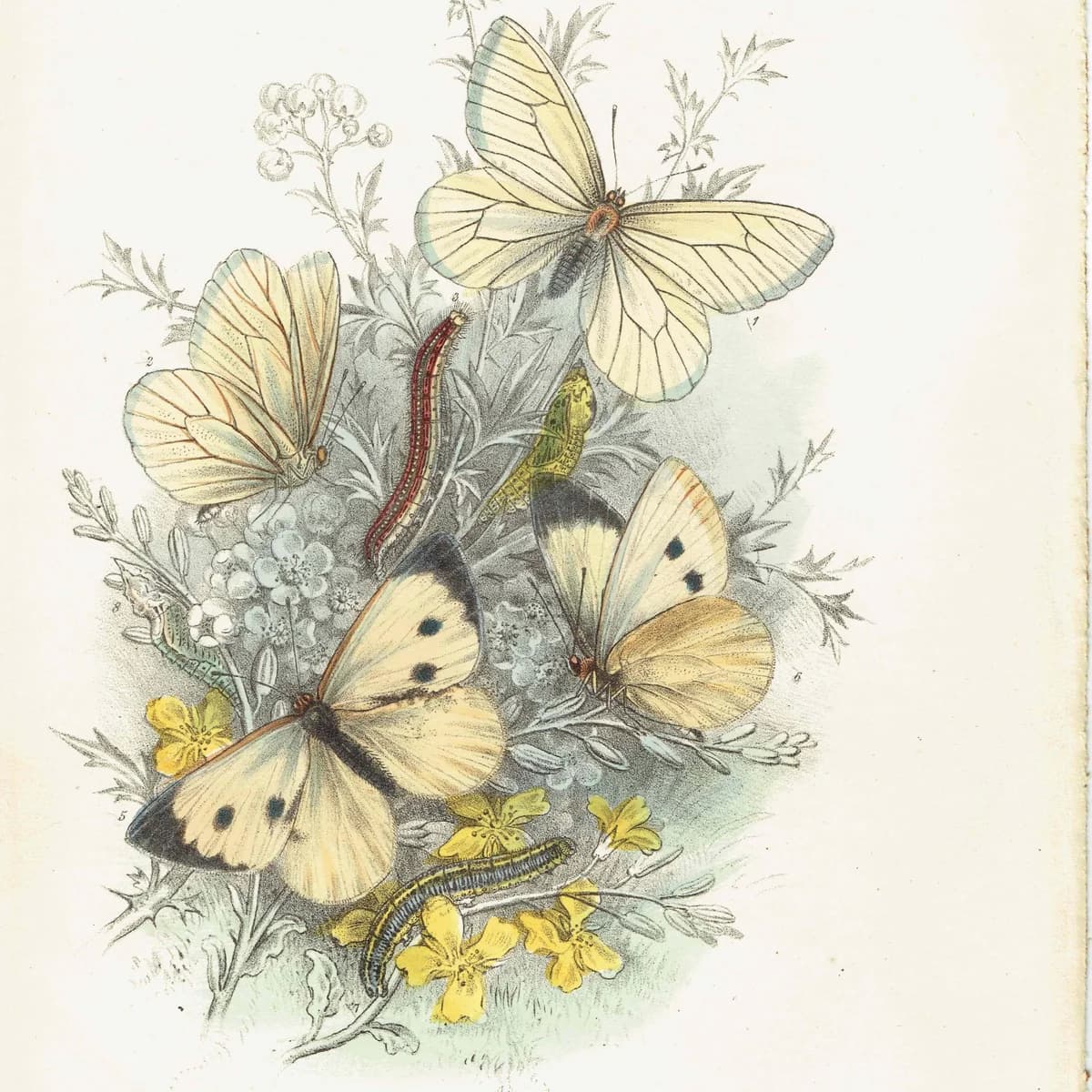
1859 Black-veined White & Great Cabbage White Butterflies - Hand-Coloured Lithograph, Henry Noel Humphreys, Plate III - 7 x 10.4 in
7 x 10.4 in
19th Century
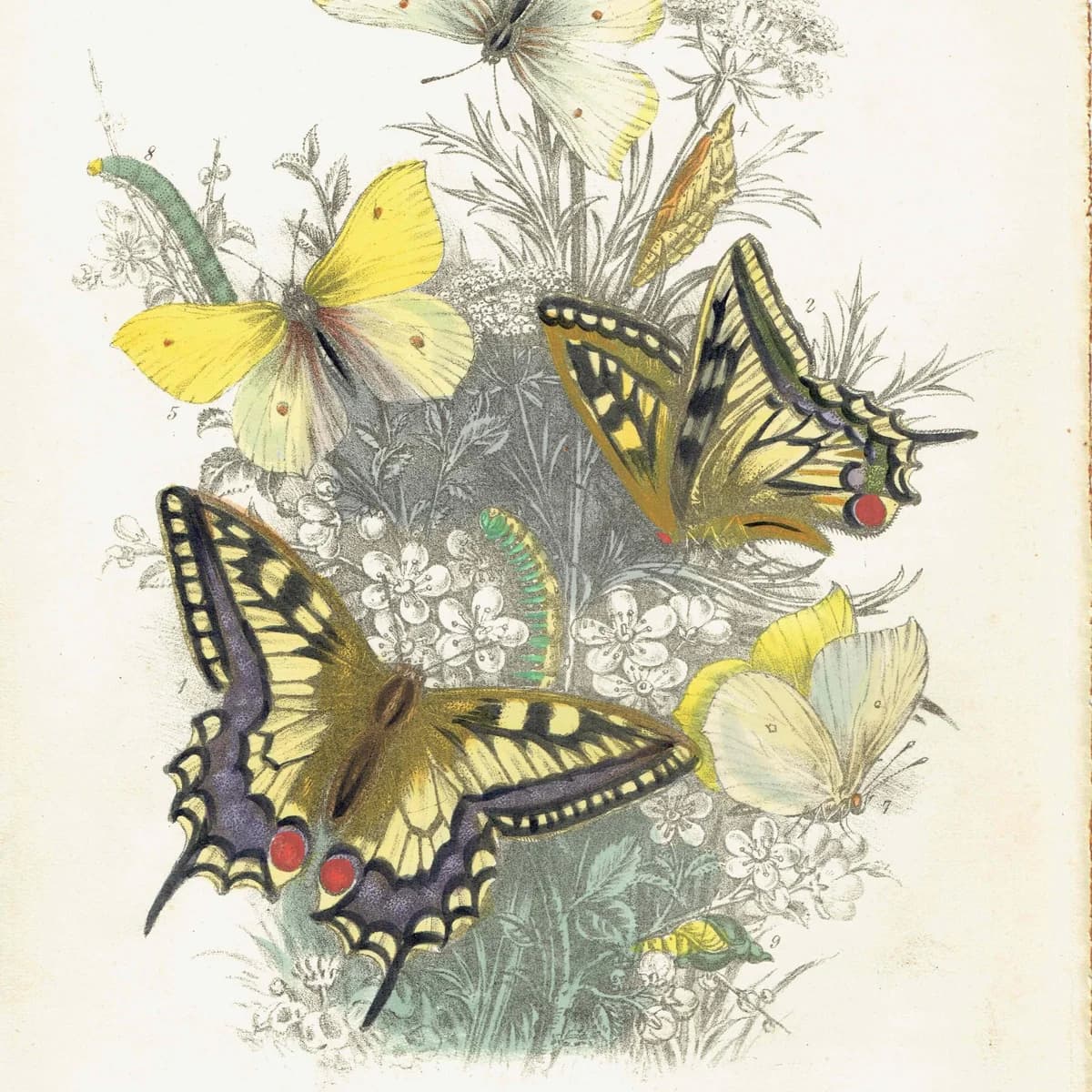
1859 Swallowtail & Brimstone Butterflies - Hand-Coloured Lithograph by Henry Noel Humphreys, Plate I - 7 x 10.4 in
7 x 10.4 in
19th Century
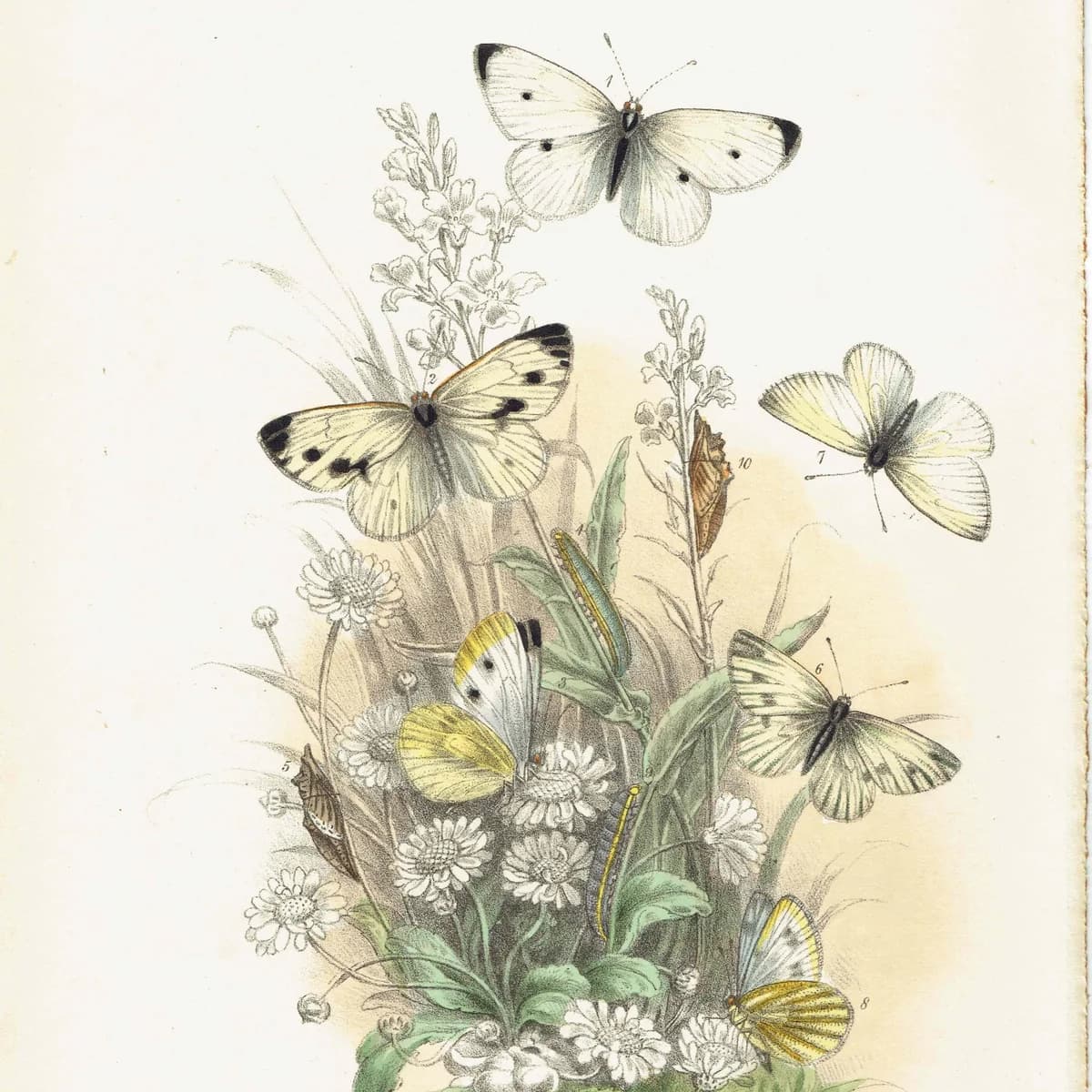
1859 Small Cabbage White & Green-veined White Butterflies - Hand-Coloured Lithograph, Henry Noel Humphreys, Plate IV - 7 x 10.4 in
7 x 10.4 in
19th Century
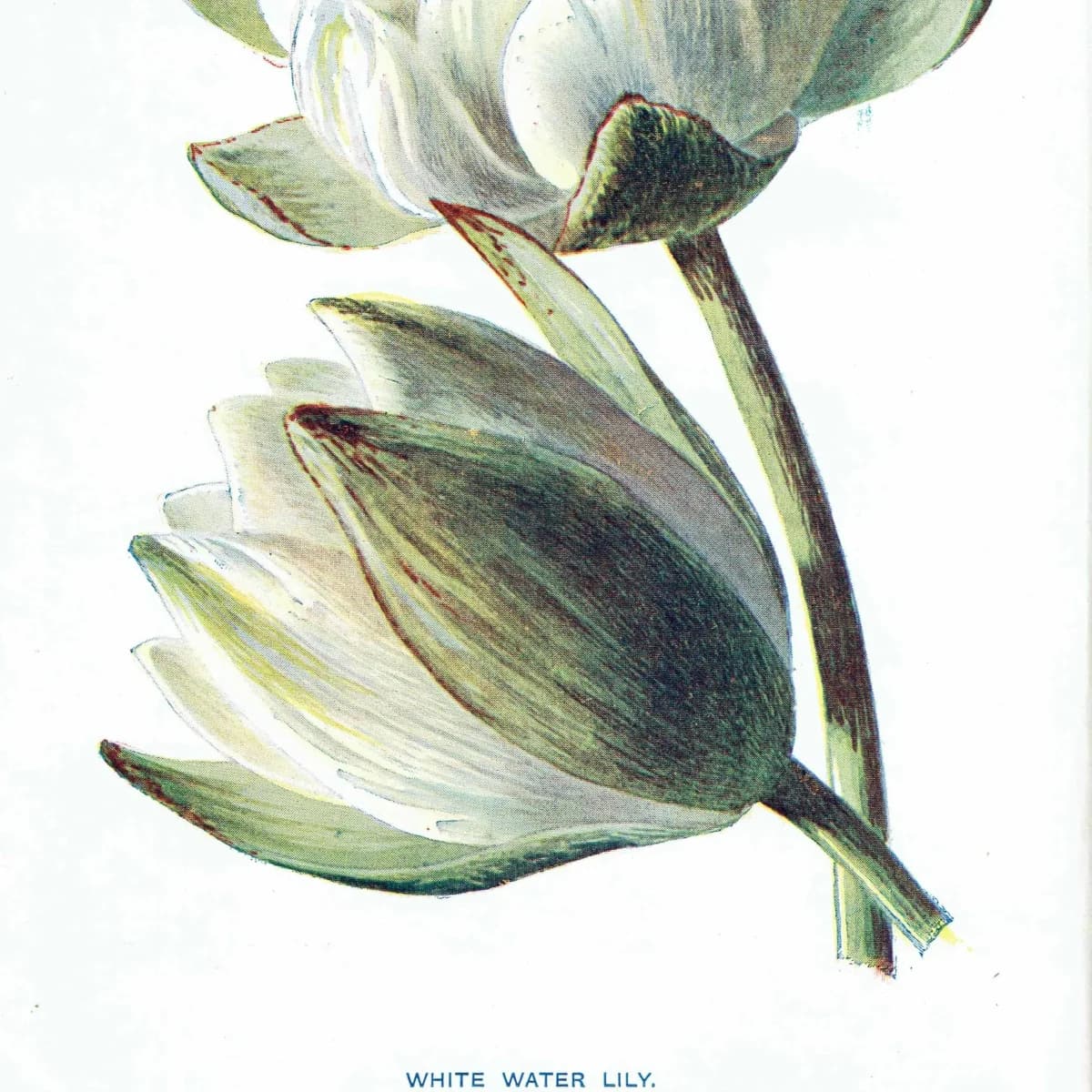
Antique White Water Lily Print – 1910s Hulme Botanical Illustration
Early 20th Century
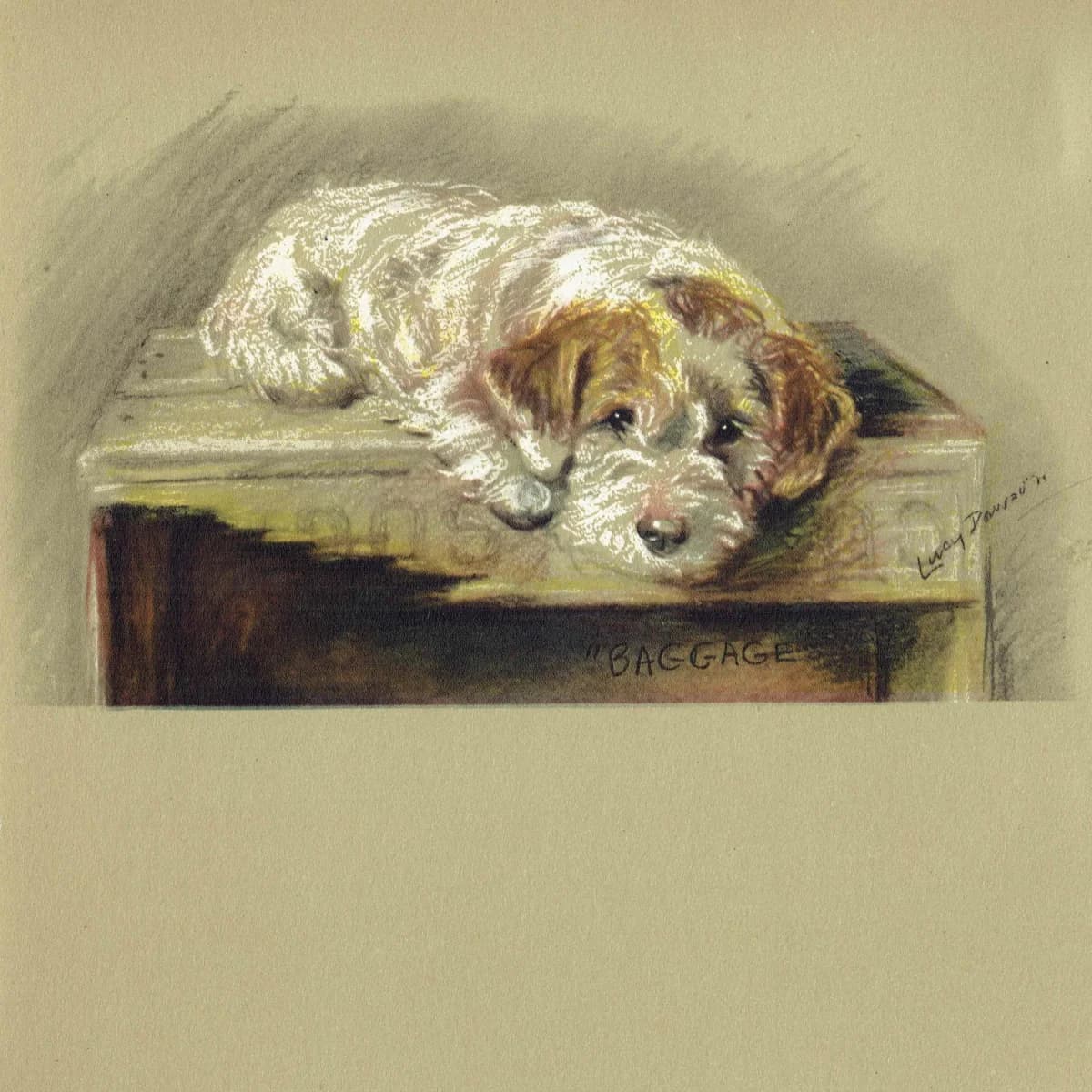
1946 Wire Fox Terrier 'Baggage' - Original Vintage Print By Dawson - Dog Portrait Pet Art Neighbours Lucy - 7 x 9.5 in
7 x 9.5 in
Mid 20th Century