

1 of 6
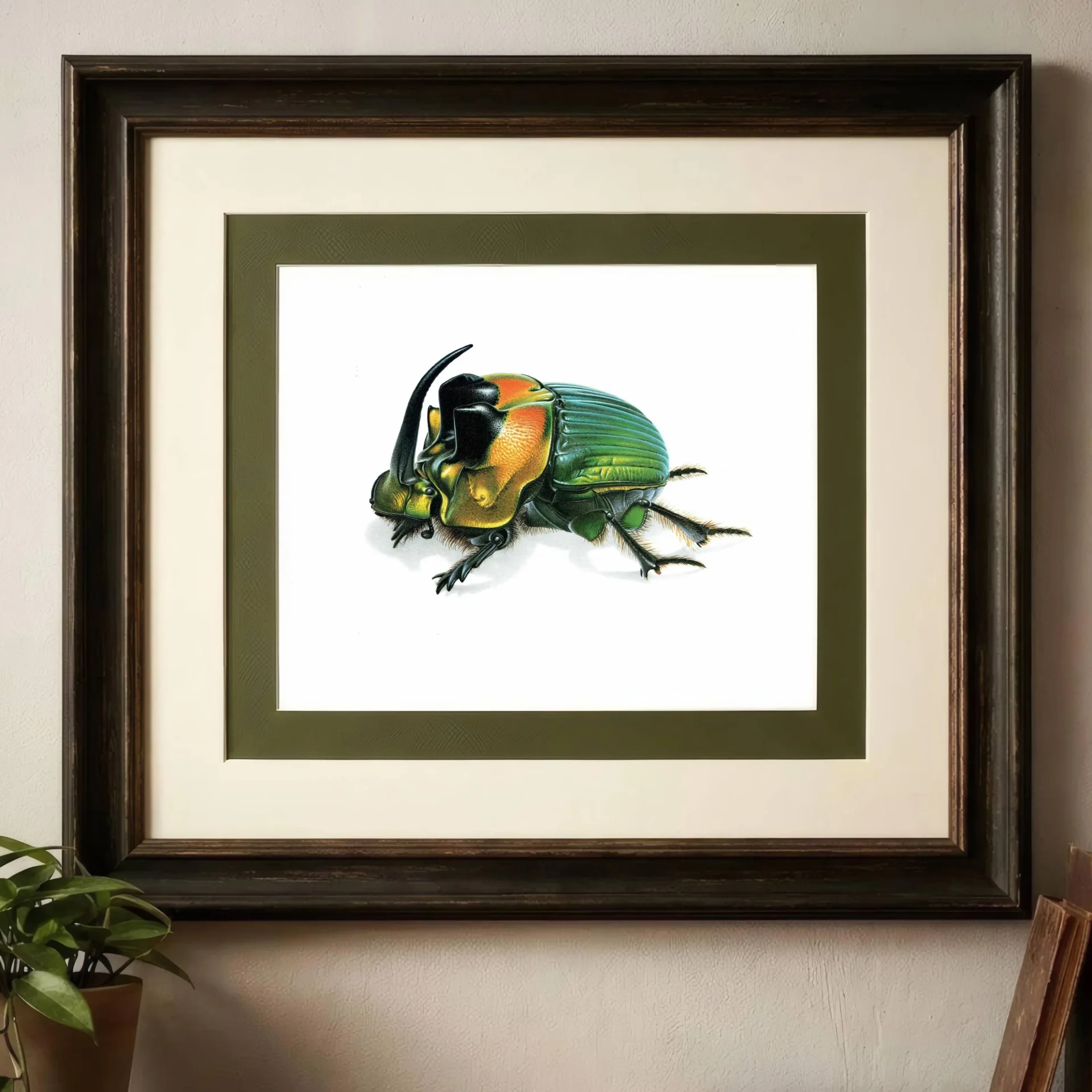
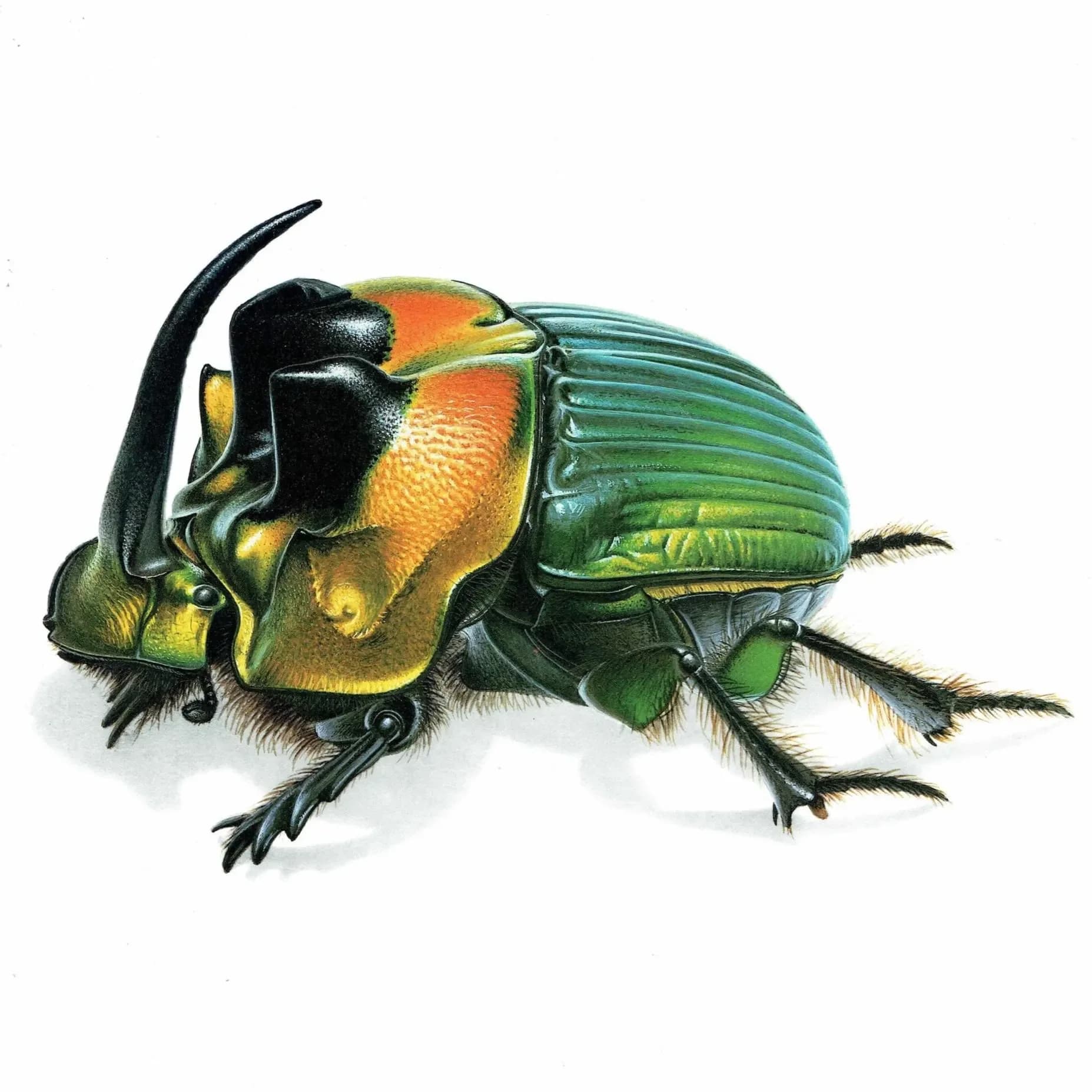
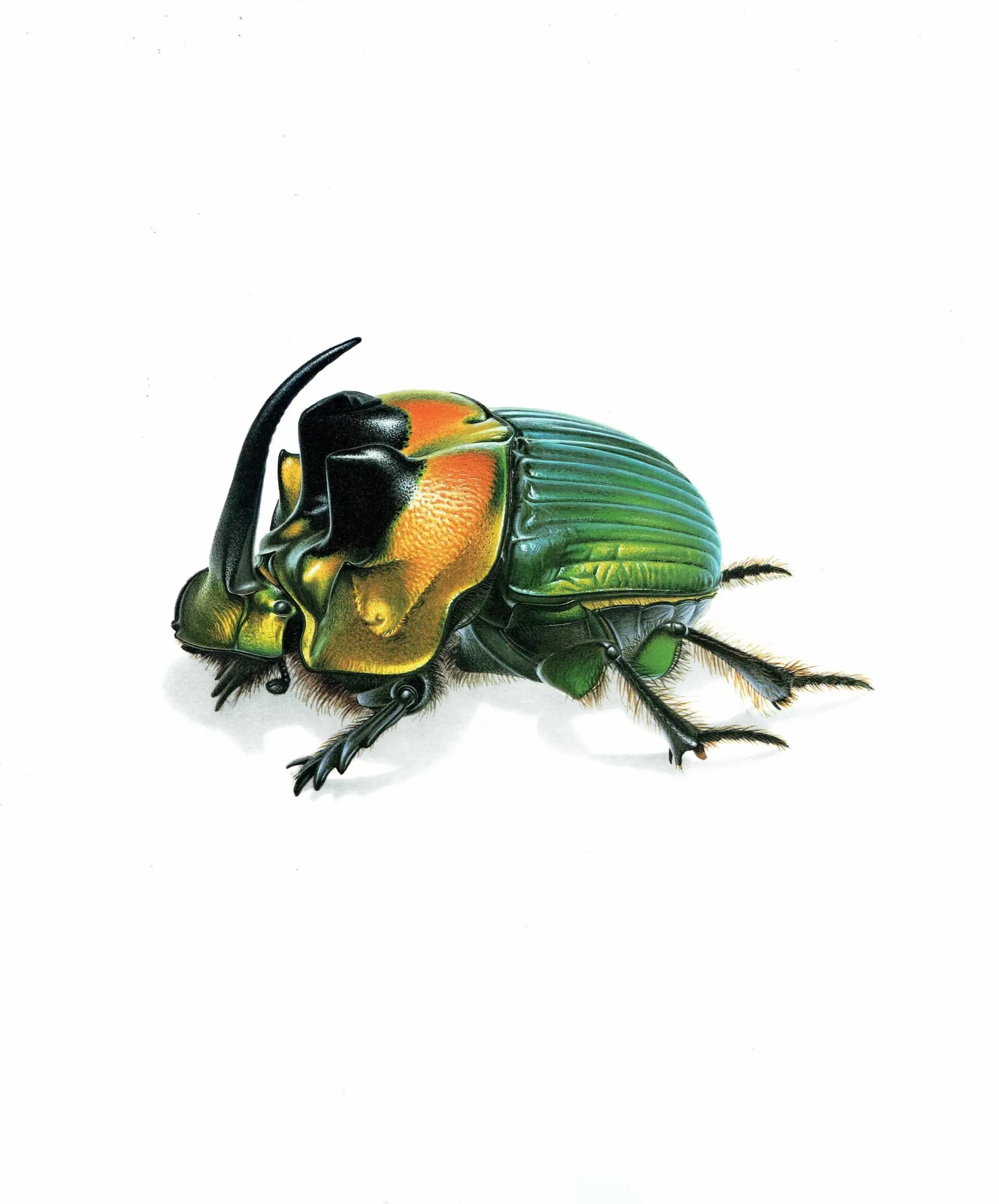
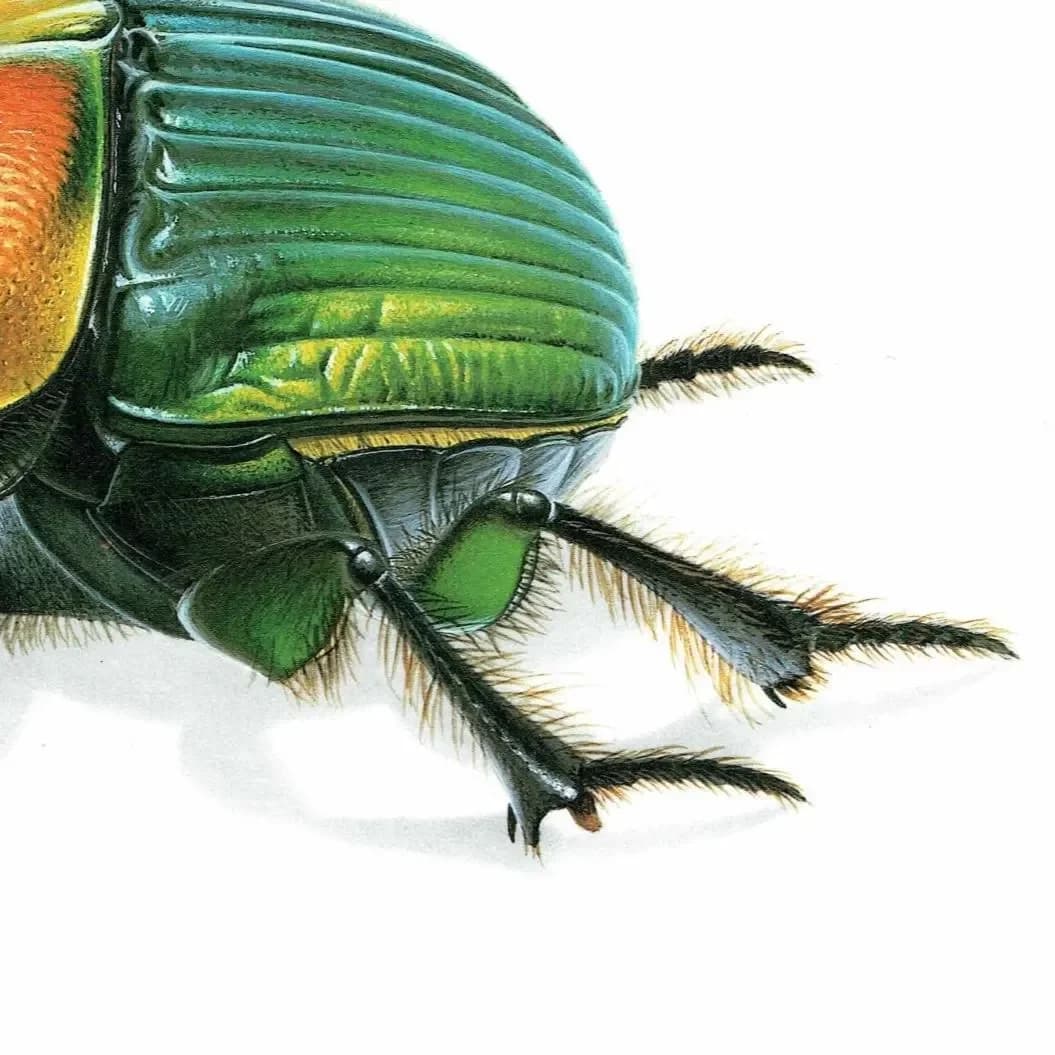
1986 Rainbow Scarab Emperor Dung Beetle Print - Durin Bernard Insectes - Scientific Illustrations Louis Chevrolat Entomology - 11 x 13 in
This is a gorgeous high quality vintage print with vivid colours taken from a disbound copy of Les Insectes by Bernard Durin. The dimensions are 11 x 13 inches.
Visit https://www.etsy.com/uk/shop/ForestHillArtsHouse?section_id=53836226 for more Insects prints.
Louis Alexandre Auguste Chevrolat described and named the Phanaeus imperator, now known as Sulcophanaeus imperator, in 1844. It was later revised and assigned to the genus Sulcophanaeus, becoming Sulcophanaeus imperator. Chevrolat is credited with the initial discovery and naming of this beetle.
Phanaeus means “light” in Greek. This genus of dung beetles from Central and South America belongs to the same family as the sacred scarab of Egypt. Like the latter, Phanaeus beetles form balls from the excrement of herbivores and bury them in underground tunnels where they lay their eggs. These balls serve as food for the larvae once they hatch. The scarab, a symbol of life, was revered by the inhabitants of ancient Egypt and was later used by Christians as a symbol of resurrection, as it “emerges from the tomb by abandoning its old shell.” Did the person who named Phanaeus intend to reference this idea? Or was it rather the god Phanès, who broke the cosmic egg from which the world emerged? The species described here is imperator, a term generally designating an emperor or sovereign.
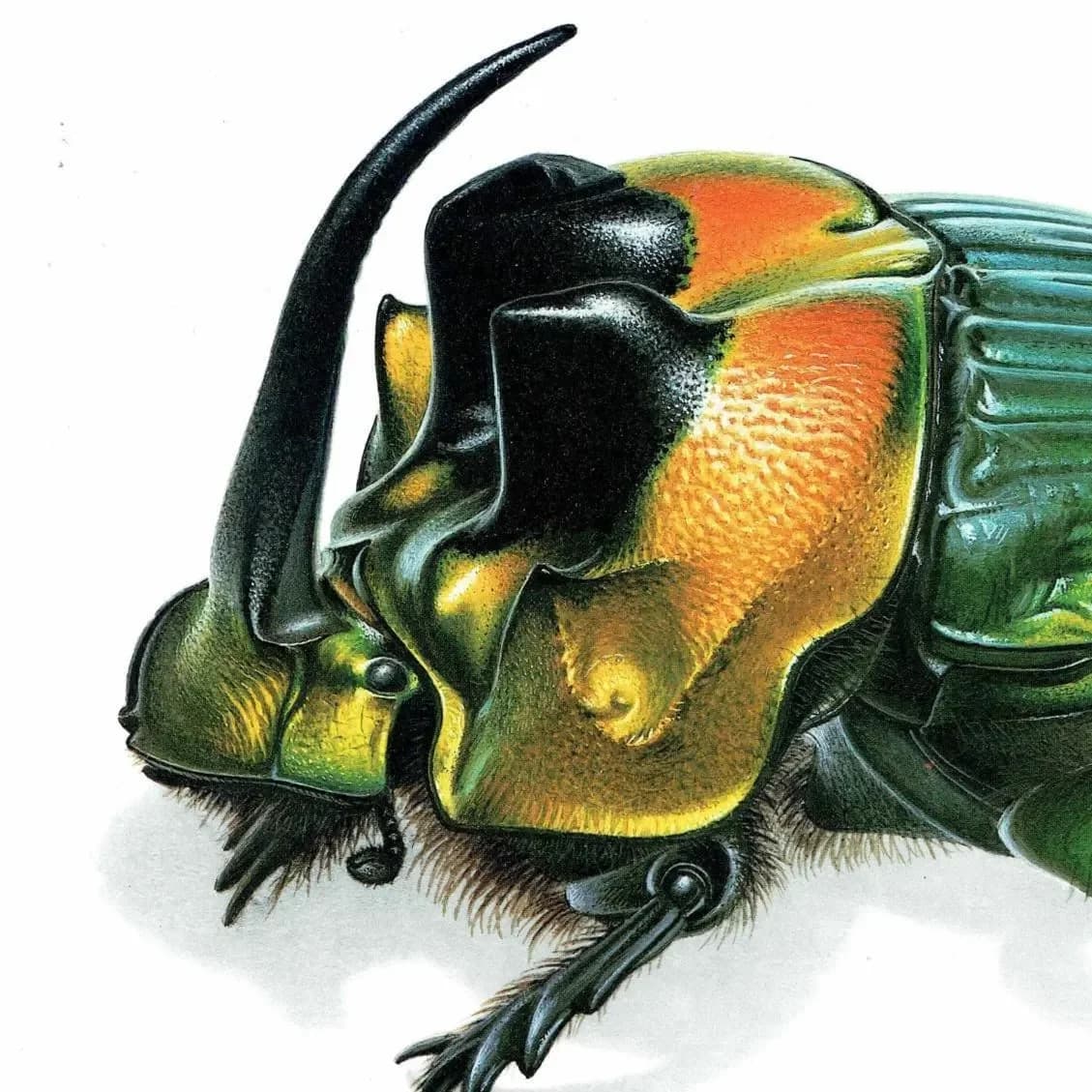
The metallic, harmonious colors are arranged like a mosaic on the beetle’s carapace, adorned with various tubercles, giving it a majestic appearance. Thanks to its clypeus, its pronotum excavated toward the front, and its powerful legs, like a bulldozer, it kneads and buries its balls, digs tunnels and chambers. With its head, legs, and strong pronotum, it transports the dung to its underground burrow. Some species of Phanaeus surround their dung balls with an extra 2 cm thick layer of clay so that once dried and hardened, the interior retains the moisture essential for the larva. When rains come and soften the clay, the young beetle hatches and finds a moist cradle.
Other Phanaeus species make their balls with carrion and decaying plants.
As mentioned above, the behavior of various Phanaeus species resembles that of their Egyptian cousins. The eggs are placed directly on the balls so the larvae can easily find ready-to-eat food upon hatching. After laying her eggs, the female abandons the balls and no longer tends to her offspring. This method, which does not require ongoing care for the larvae, contrasts with that of other beetles that provide constant care. So how does the female Phanaeus ensure her offspring's survival? She compensates by laying more eggs than species that invest more heavily in parental care.
There are about 80 species of Phanaeus. Phanaeus imperator lives in Bolivia, Argentina, and southern Brazil.
**Background**
Bernard Durin was an artist and illustrator transforming the tiniest creatures into works of art. Born in France in 1940, "Beetles and Other Insects," was published in 1980. It is considered a masterpiece. Durin has captured the intricate patterns, textures, and colours of his subjects with stunning accuracy. He made around 60 portraits of insects, using rare and fascinating specimens entrusted to him by the entomologists of the Museum of Natural History in Paris. Durin’s work combines scientific precision with artistic beauty. This has made them valuable to entomologists and other scientists. Bernard Durin passed away in 1988. His illustrations continue to be admired for their beauty and precision, and they remain a valuable resource for anyone interested in the natural world.
**About Your Purchase:**
- Your purchase is this ORIGINAL vintage print. No modern reprints, reproductions, or copies.
- Please note: This print is sold unmounted.
**Condition:** Good, consistent with age. The reverse has text in German with no show-through.
**Returns & Shipping**
- **Returns:** No-questions-asked within 14 days provided in the same condition as dispatched; buyer pays return shipping.
- **Packaging:** All prints are securely packaged in a clear bag with a board-backed envelope, further reinforced with recycled cardboard.
- Dispatched via Royal Mail Tracked 24/48 (and Royal Mail Tracked International) with:
- UK delivery within 1-3 days
- US/EU delivery within 5-12 days
- Rest-of-world delivery within 7-21 days
Product Details
About This Print
This original insects print dates from the Late 20th Century (1980s). Vintage prints capture the aesthetic sensibilities of their era with distinctive artistic styles.
Each print from Forest Hill Arts House is carefully inspected for condition and authenticity. We provide detailed provenance information and ship with protective packaging to ensure your print arrives in excellent condition.
Related Topics
entomology printscience artinsect illustrationmuseum specimenrainbow scarab imageemperor dung beetlephanaeus imperatordung beetle picture
Need a Custom Mount for Your Print?
We offer precision machine-cut picture mounts to your exact specifications. Choose from conservation-grade or standard mount board options.
Order Custom MountsRelated Products
You might also be interested in these prints
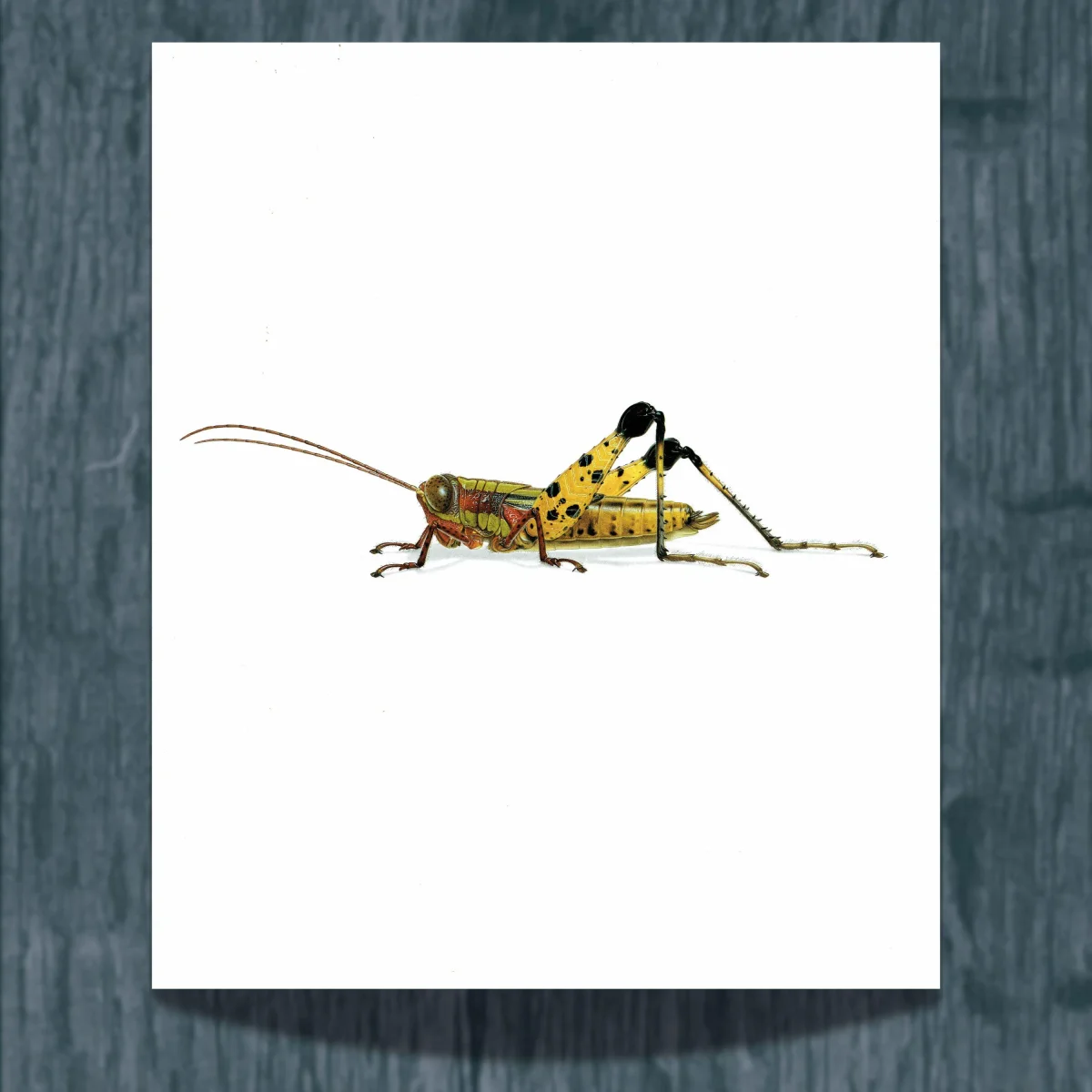
1986 Grasshopper Eucriotettix Piperacicus Print - Durin Bernard Les Insectes Scientific Illustration - Deschamps Entomology - 11 x 13 in
11 x 13 in
Late 20th Century
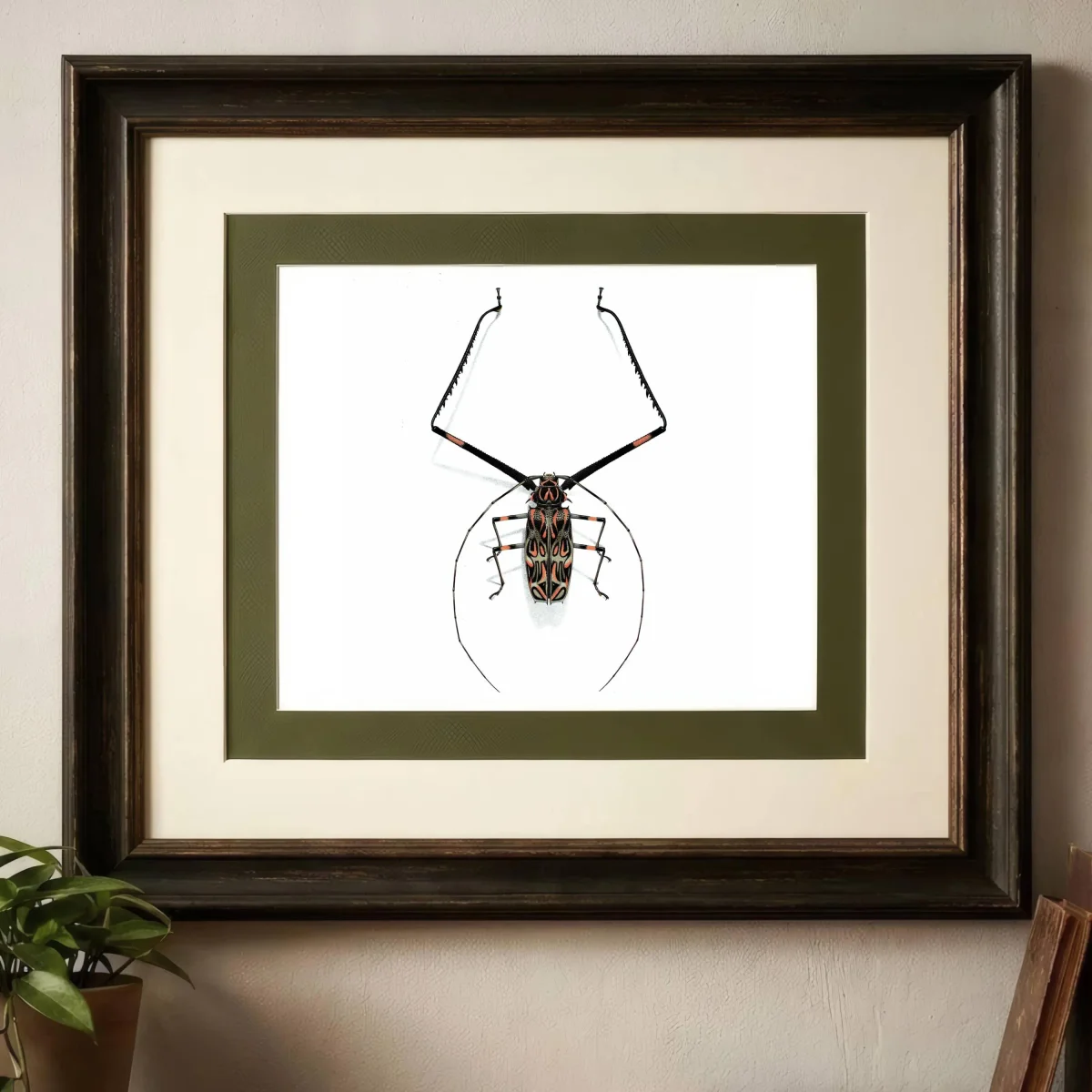
1986 Harlequin Beetle Acrocinus Longimanus Print - Durin Bernard Les Insectes Scientific Illustration - Linnaeus Entomology - 11 x 13 in
11 x 13 in
Late 20th Century
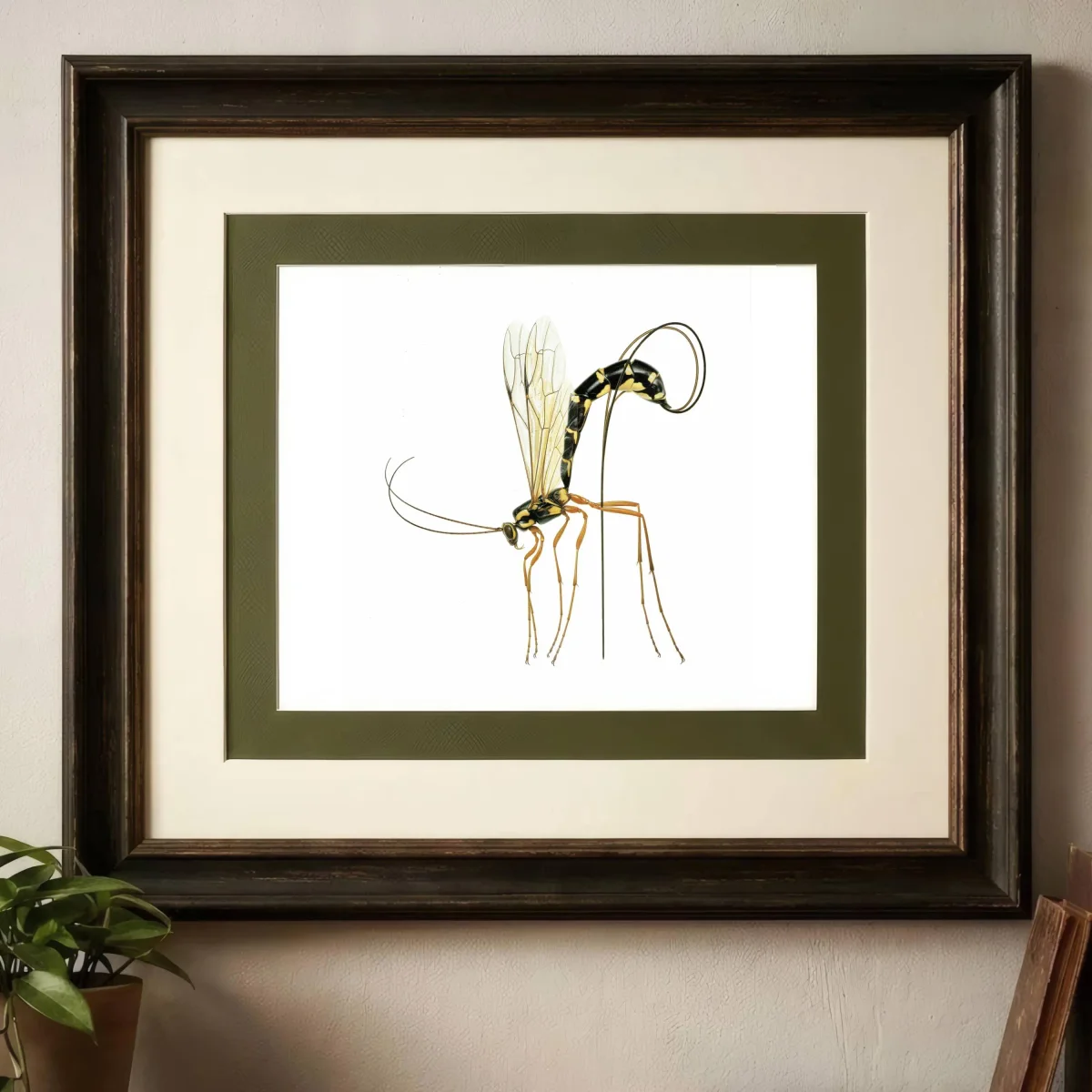
1986 Giant Ichneumon Wasp Rhyssa Persuasoria Print - Dupin Bernard Les Insectes Scientific Art - Linnaeus Carl Entomology - 11 x 13 in
11 x 13 in
Late 20th Century
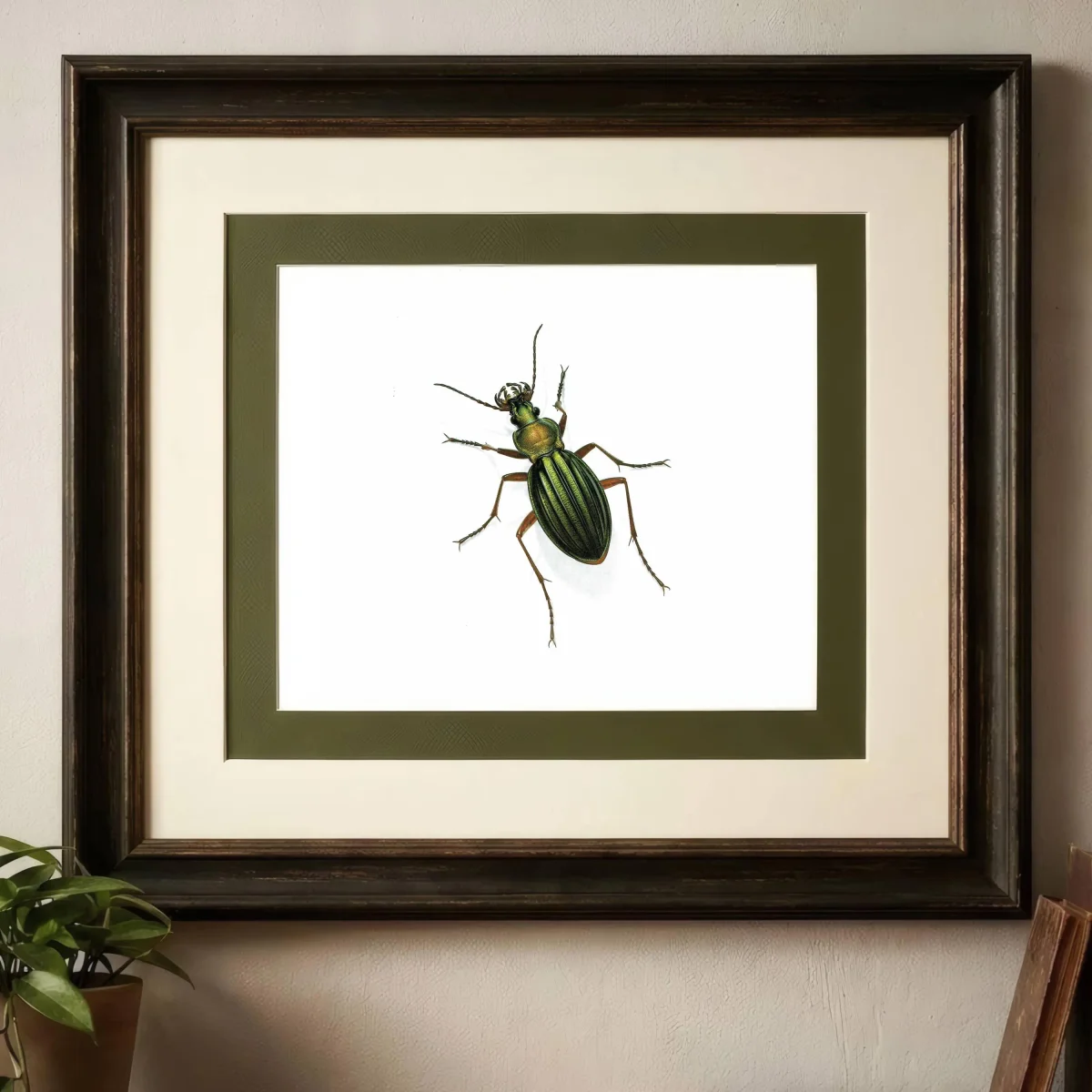
1986 Golden Ground Beetle Carabus Auronitens Print - Durin Bernard Les Insectes Scientific Illustration - Fabricius Entomology - 11 x 13 in
11 x 13 in
Late 20th Century

Antique White Water Lily Print – 1910s Hulme Botanical Illustration
Early 20th Century
1946 Wire Fox Terrier 'Baggage' - Original Vintage Print By Dawson - Dog Portrait Pet Art Neighbours Lucy - 7 x 9.5 in
7 x 9.5 in
Mid 20th Century