

1 of 6
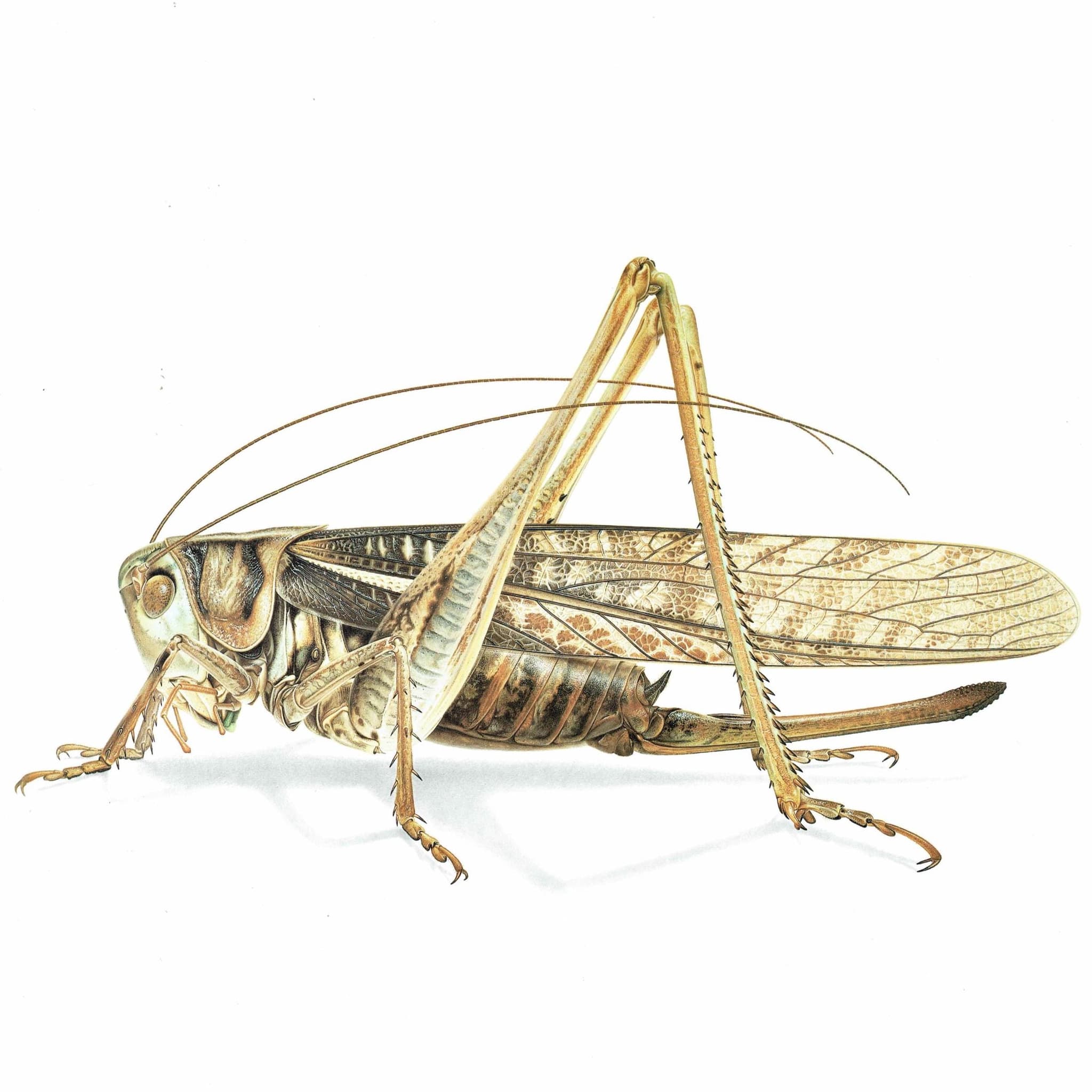
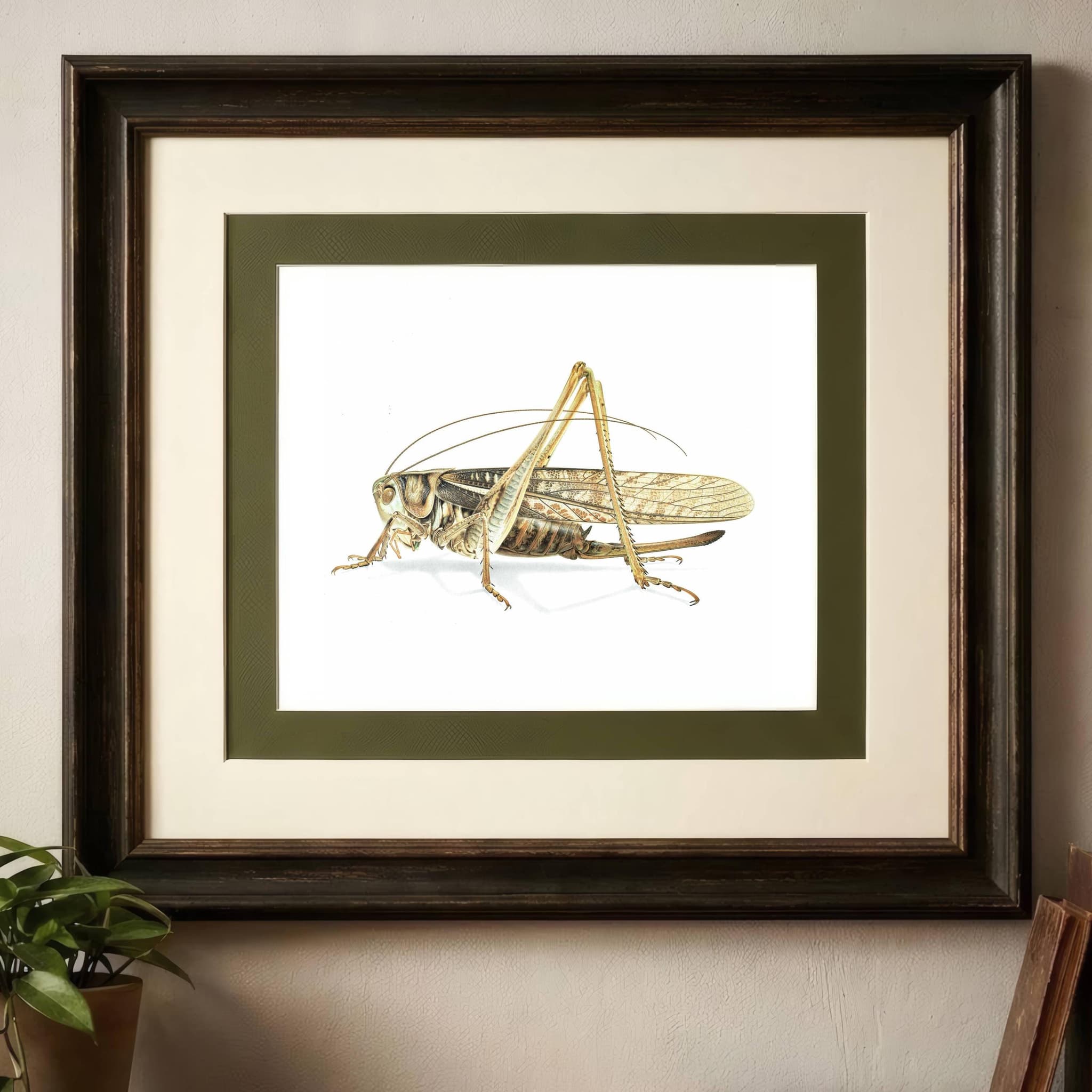
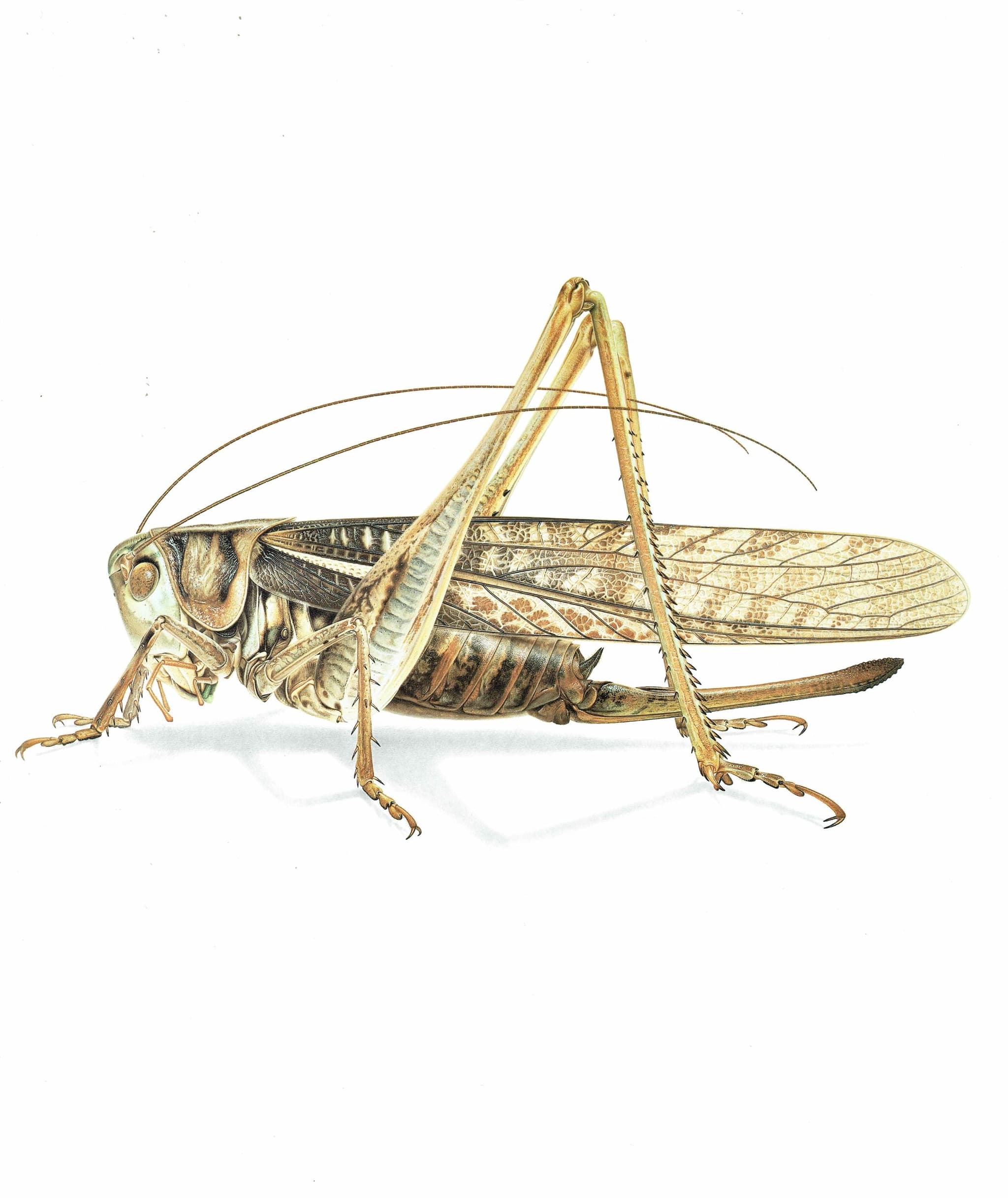
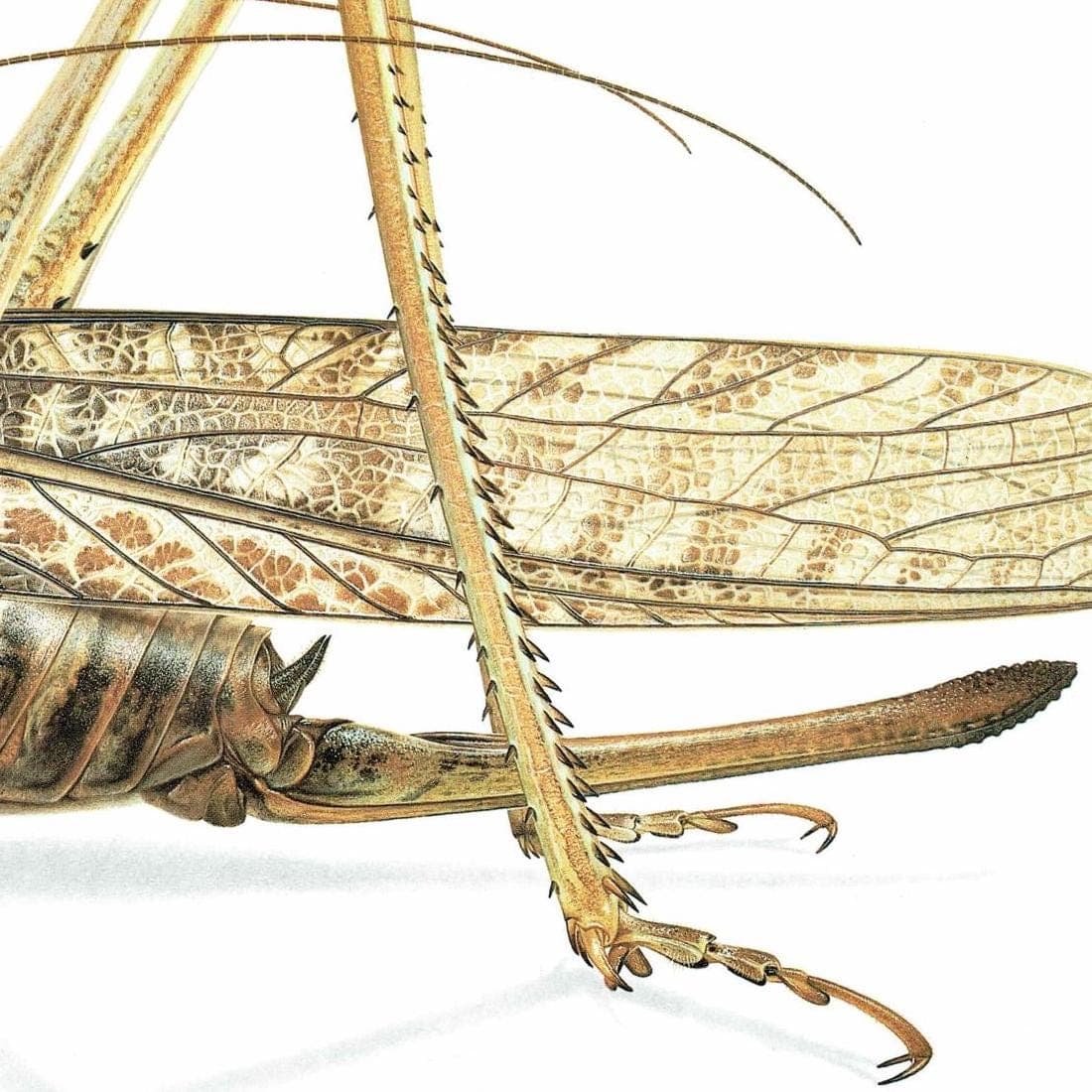
1986 Southern Wartbiter Decticus Albifrons Print - Durin Bernard Les Insectes Scientific Illustration - Fabricius Entomology - 11 x 13 in
This is a gorgeous high quality vintage print with vivid colours taken from a disbound copy of Les Insectes by Bernard Durin. The dimensions are 11 x 13 inches.
Visit https://www.etsy.com/uk/shop/ForestHillArtsHouse?section_id=53836226 for more Insects prints.
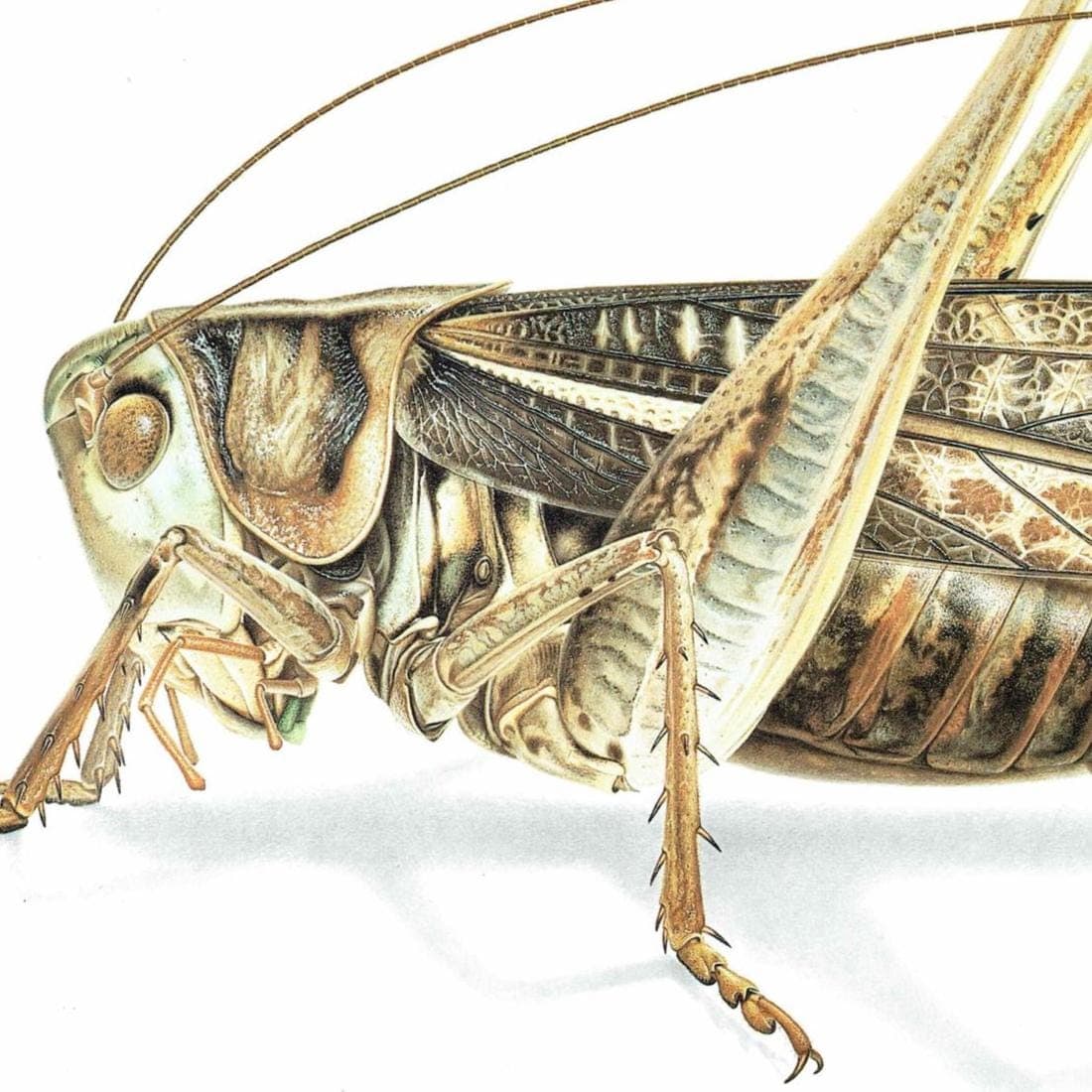
The insect shown here is Decticus albifrons, a close relative of Decticus verrucivorus, whose name comes from its supposed power to cure warts. In the past, it was said that the gastric juices of these bush-crickets, when ingested, would dissolve warts. People claimed this remedy worked; the custom lasted until the beginning of this century in certain Nordic regions.
All bush-crickets with long antennae belong to the superfamily of tettigoniids. In these insects, the sound-producing organs appeared before the evolutionary development of hearing. Unlike cicadas, which use membranes on their abdomens, these insects produce their sound by rubbing the left elytron against the right one. The scraper, a sharp-edged ridge, is located on the inner edge of the left elytron. The right elytron lies flat on top of the left one. The sounds are amplified by a circular membrane similar to a tympanum. Generally, only males emit sounds, which serve to attract females. The auditory organs are located on the front legs, not far from the knee; the tibia is very thin and the tubular tracheae, distinctly attached to the tympana, resonate when they register vibrations. These vibrations are transmitted by sensory cells to the auditory nerves. Insects perceive sounds of high frequencies that are beyond the range of human hearing. Males possess both the organs needed to produce sound and the organs needed to detect a rival, and sometimes to locate a female by emitting a short call, which may resemble, in a quiet field, the noise of milk boiling over. The song of Decticus albifrons is heard when the sun shines on the soil or on a hedgerow, or in trees and shrubs. Its song is muffled and perfectly audible. Already in the last century, the famous entomologist Jean-Henri Fabre described the song of Decticus albifrons. From early morning, it vibrates in the heat, repeating itself through the day. The song starts low and grows louder, sounding like a tiny chainsaw! It is followed by prolonged chirping. This is the female's response when she sees the male. When a curious female approaches the male, the male turns toward her and uses his rear legs to place himself in position by pushing aside his hind wings and lowering his abdomen. The female climbs on the male, and during the following hour, the male transfers to her a sperm capsule. Fabre described the mating (in Souvenirs entomologiques, 6 volumes, 1746–1760). Mating lasts about a week. About a week after mating, the female lays about fifty eggs.
The diet of Decticus albifrons is diverse: it attacks the tender parts of plants, with the help of its sharp jaws, and sometimes preys on other insects such as caterpillars. This bush-cricket is very shy and quick: when you approach it, it jumps or flies away. In addition to the common green form, there is a variant with brown elytra and a yellowish forehead. Its length ranges between 32 and 38 mm; it inhabits Mediterranean regions: Spain, southern France, Italy, Yugoslavia, Turkey, and North Africa.
**Background**
The artist Bernard Durin was an artist and illustrator transforming the tiniest creatures into works of art. Born in France in 1940, "Beetles and Other Insects," was published in 1980. It is considered a masterpiece. Durin has captured the intricate patterns, textures, and colours of his subjects with stunning accuracy. He made around 60 portraits of insects, using rare and fascinating specimens entrusted to him by the entomologists of the Museum of Natural History in Paris. Durin’s work combines scientific precision with artistic beauty. This has made them valuable to entomologists and other scientists. Bernard Durin passed away in 1988. His illustrations continue to be admired for their beauty and precision, and they remain a valuable resource for anyone interested in the natural world.
**About Your Purchase:**
- Your purchase is this ORIGINAL vintage print. No modern reprints, reproductions, or copies.
- Please note: This print is sold unmounted.
**Condition:** Good. Consistent with age. The reverse has text in German. There is no show-through.
**Returns & Shipping**
- **Returns:** No-questions-asked within 14 days provided in the same condition as dispatched; buyer pays return shipping.
- **Packaging:** All prints are securely packaged in a clear bag with a board-backed envelope, further reinforced with recycled cardboard.
- Dispatched via Royal Mail Tracked 24/48 (and Royal Mail Tracked International) with:
- UK delivery within 1-3 days
- US/EU delivery within 5-12 days
- Rest-of-world delivery within 7-21 days
Product Details
About This Print
This original insects print dates from the Late 20th Century (1980s). Vintage prints capture the aesthetic sensibilities of their era with distinctive artistic styles.
Each print from Forest Hill Arts House is carefully inspected for condition and authenticity. We provide detailed provenance information and ship with protective packaging to ensure your print arrives in excellent condition.
Related Topics
decticus albifronsbush cricket printtettigoniid insectdurin insect printbernard durinfield insect decorentomology lovervintage bug print
Need a Custom Mount for Your Print?
We offer precision machine-cut picture mounts to your exact specifications. Choose from conservation-grade or standard mount board options.
Order Custom MountsRelated Products
You might also be interested in these prints
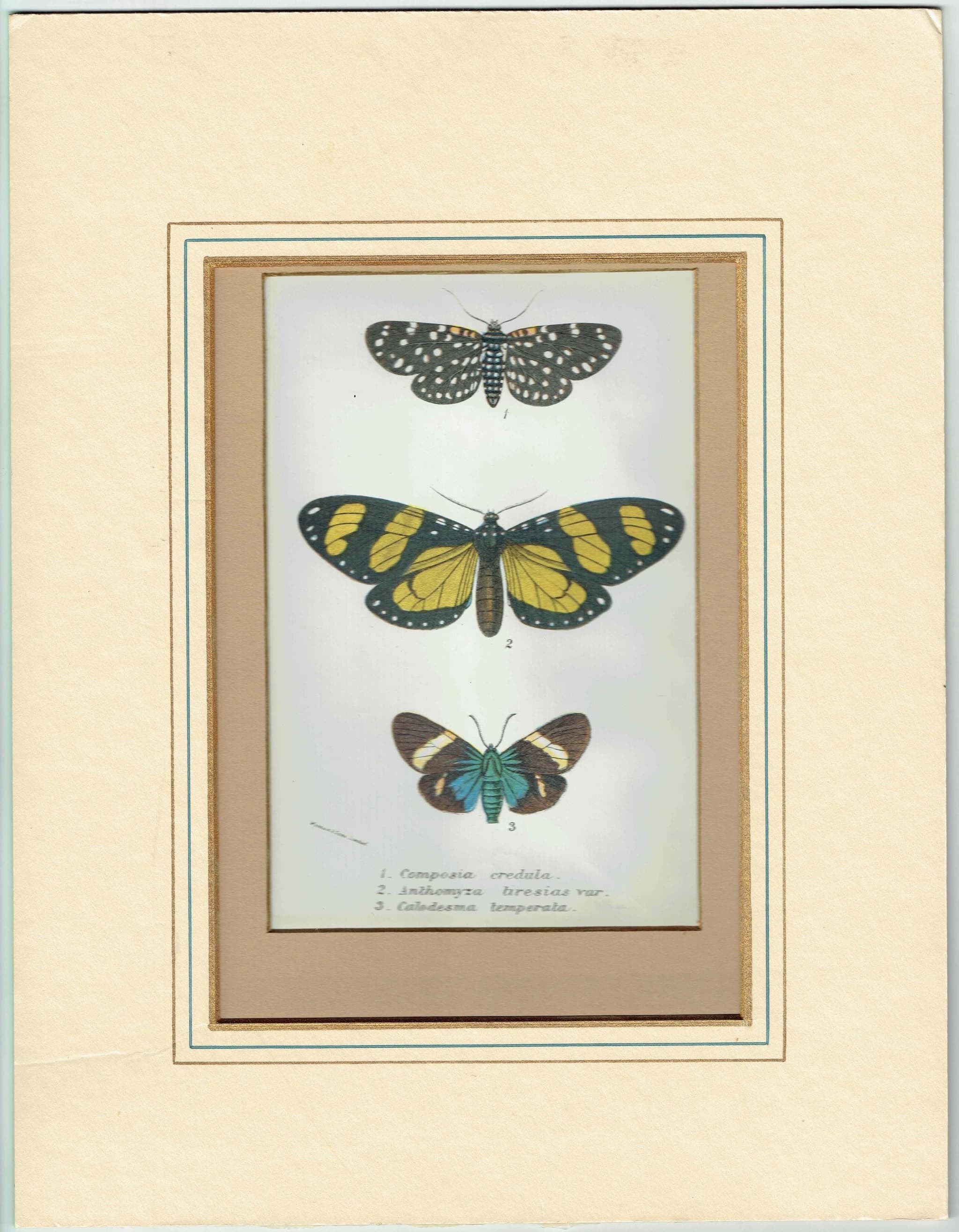
1896 Antique Moth Print - Composia credula, Anthomyza teresias, Calodesma temperata - Moth species - Entomology Wall Art - 7 x 4.5 in
7 x 4.5 in
19th Century

1986 Wasp Orb-Weaver Spider Argiope Bruennichii Print - Durin Bernard Les Insectes Scientific Illustration - Scopoli Entomology - 11 x 13 in
11 x 13 in
Late 20th Century
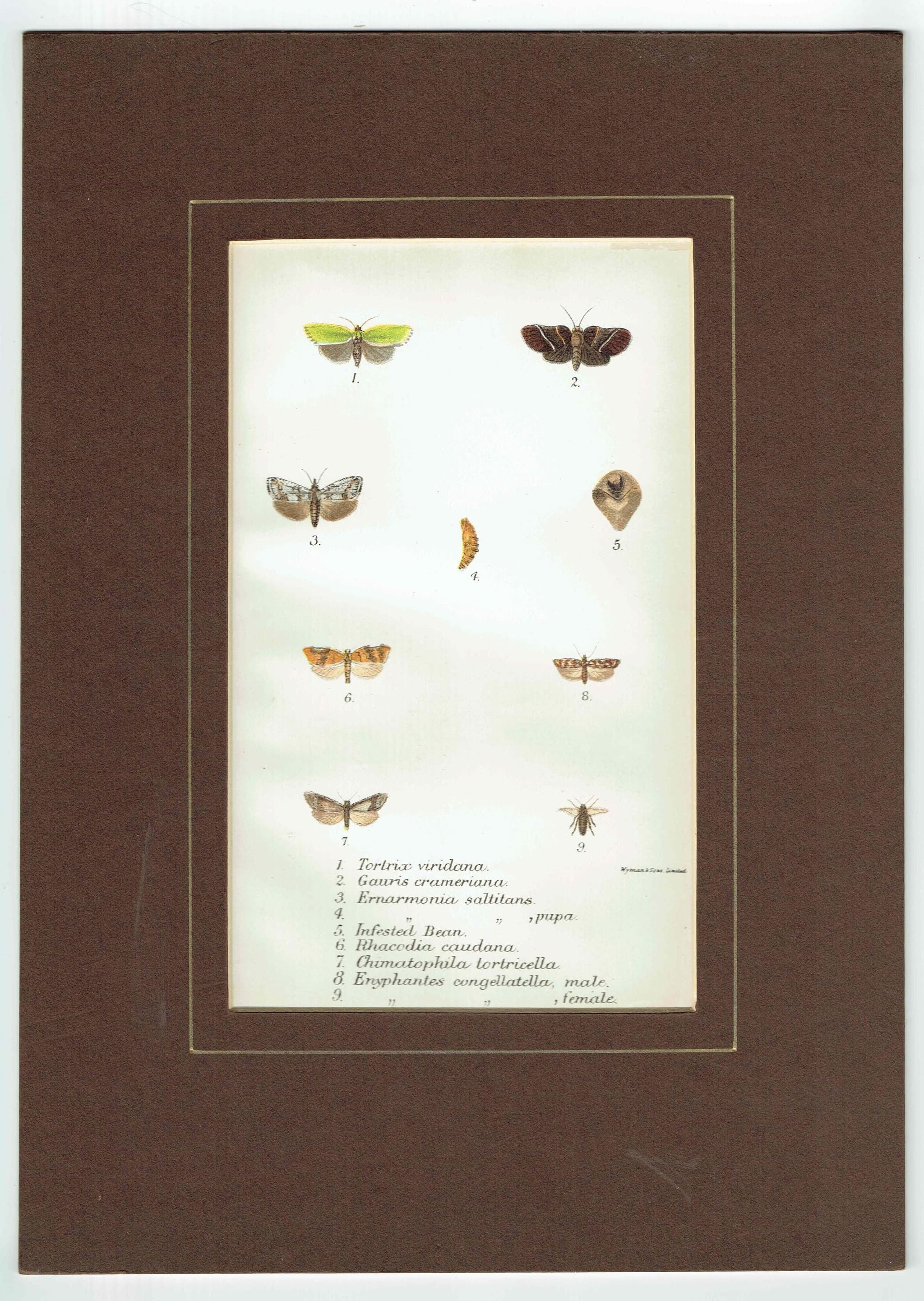
1897 Tortricid Moths Print - Hand-colored Entomology Plate - Tortrix viridana, Gauris crameriana & More - Mount window 4.25 x 7 in
4.25 x 7 in
19th Century
1986 Magnificent Weevil Eupholus Magnificus Print - Durin Bernard Les Insectes Science Illustration - Kirch Entomology - 11 x 13 in
11 x 13 in
Late 20th Century
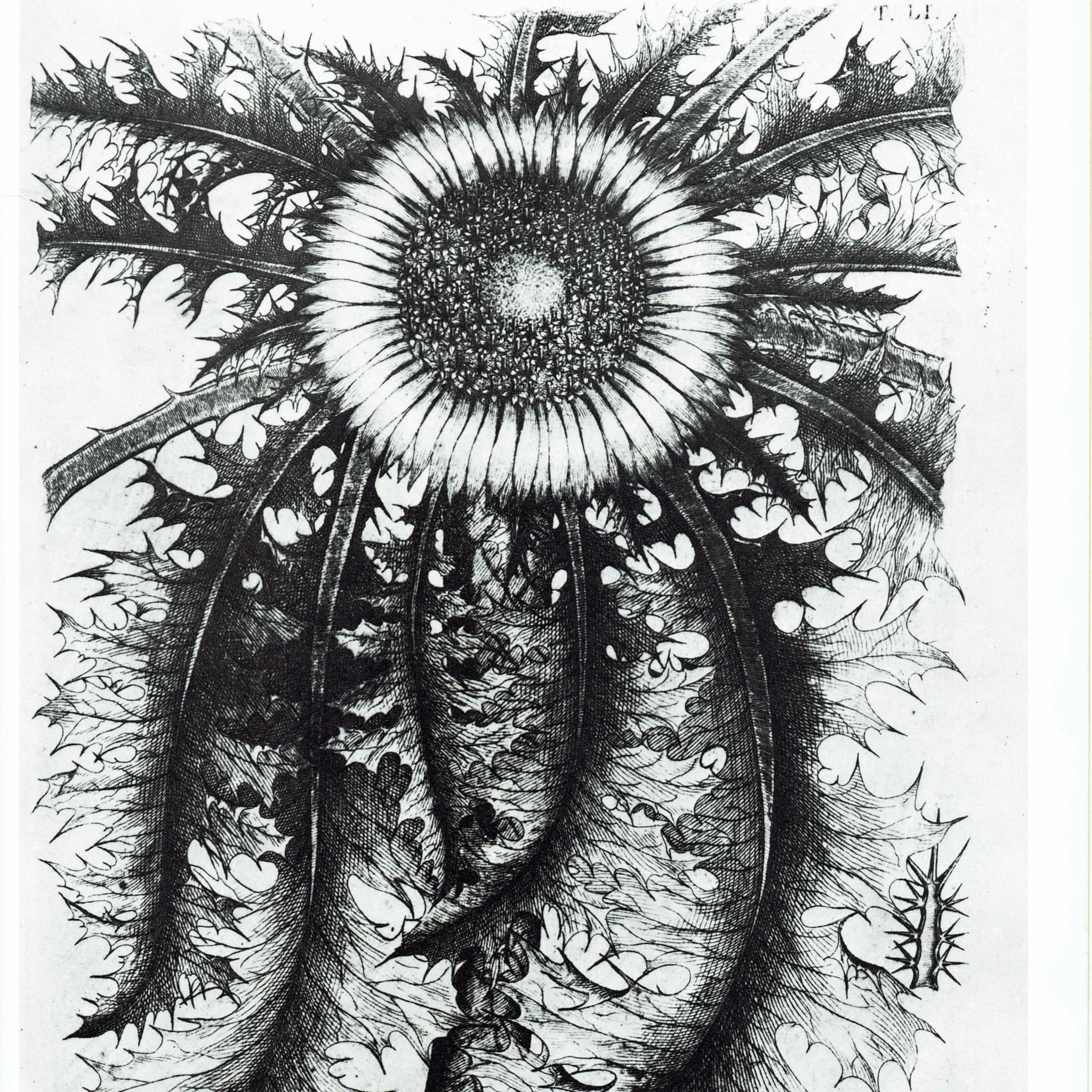
Carline Thistle - Original Vintage Print By Allioni - Flora Pedemontana Plate 51 Botanical Study Flower Art - 10 x 14 in
10 x 14 in
Late 20th Century
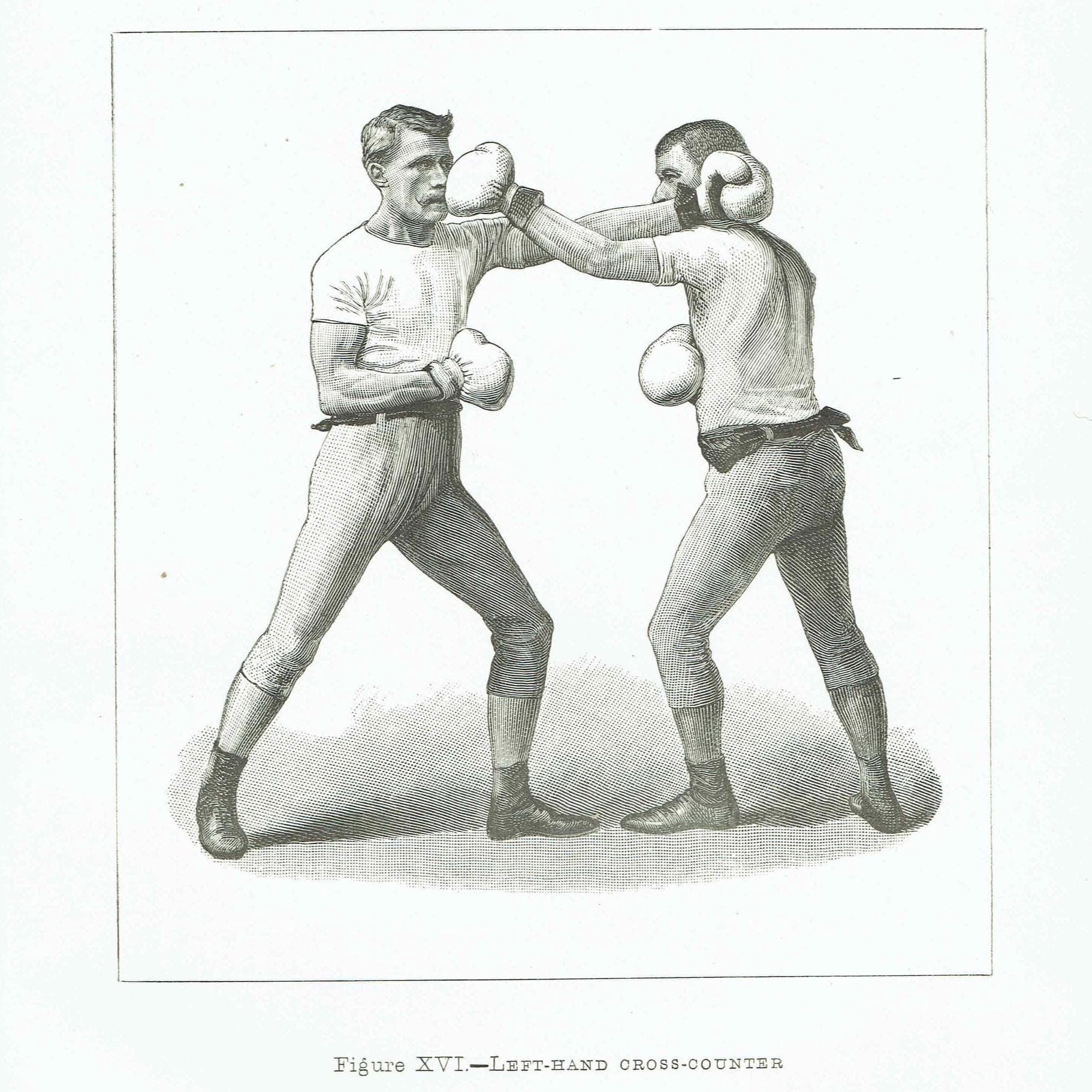
1889 Left-Hand Cross-Counter Boxing - Original Antique Print - Badminton Library Victorian Sports Pugilism Athlete - 5 x 7 in
5 x 7 in
19th Century